
Exploring the Rich History of El Salvador: A Guide to Historical Sites
I always feel like El Salvador carries its history right on the surface. You see it in the old Maya ruins, the quiet colonial towns, and the stories people still pass down. It’s the kind of place where the past doesn’t feel far away at all.
And when you start moving around the country, you notice how every site has its own voice, from ancient pyramids to painted churches and even modern memorials. Exploring these places makes it easy to understand how El Salvador grew, changed, and built the identity it has today.
Key Takeaways
- El Salvador’s history shows up in Maya ruins, colonial towns, and modern memorials all across the country.
- Sites like Tazumal, San Andrés, and Joya de Cerén help you see how ancient communities lived, traded, and built their world.
- Colonial places such as Suchitoto, La Merced Church, and San Salvador Cathedral show how Spanish influence shaped culture and daily life.
- The National Palace and the Monumento al Divino Salvador del Mundo tell important political and national stories.
- The country protects its heritage through laws, museums, and preservation programs led by the Ministry of Culture.
- Traveling around these sites is easier with guides, shuttles, or car rentals, especially in the dry season.
- El Salvador mixes ancient traditions, colonial influence, and modern history, making it a unique place to explore and understand.
The Mayan Legacy: Ancient Ruins of El Salvador
I always feel like the Mayan past shows up fast in El Salvador. You see it in the old stones, the shapes of the temples, and the way people still talk about the history today.
Tazumal
I remember the first time I saw Tazumal. The big pyramid kind of makes you stop for a second. It comes from a long stretch of time, maybe from around 100 to 1200 AD, and you can tell people did a lot here, traded things, held ceremonies, and lived real lives. According to information shared on Wikipedia “Tazumal was inhabited from the Classic through Postclassic periods and shows cultural links across Mesoamerica,” which explains why you see so many trade signs around the site.
Key facts:
• Built between 100 and 1200 AD
• Has a large pyramid and old tombs
• Shows signs of trade like jade and pottery
• One of the strongest Mayan ruins El Salvador has
Joya de Cerén
Joya de Cerén feels more personal to me. It’s not about kings or huge temples. It’s about how normal families lived before a volcano covered the whole place around AD 600. And just so it’s clear where this info comes from, the UNESCO World Heritage Centre explains that “Joya de Cerén contains the remains of a pre-Hispanic farming village that was covered by volcanic ash and offers exceptional insight into ancient daily life.” The Central America Tourism Agency (CATA) also shares that the village was “buried under 5m of volcanic ash, preserving everyday life,” which is why people call it the “Pompeii of the Americas.”
Key facts:
• Buried by a volcano around AD 600
• Shows daily life, not just big buildings
• Many homes still look almost the same
• One of the best spots for learning about pre-Columbian life
San Andrés
San Andrés feels like the quiet leader of the group. It worked as a center for the area from the 5th to the 9th century. When I walked around, it was easy to picture people holding meetings or doing ceremonies on those big platforms. Some signs even show they made cacao here for trade.
Key facts:
• Active from the 5th–9th centuries
• Had both ceremonial and office-like areas
• Shows evidence of cacao work
• Part of a bigger San Andrés archaeological site area
Spanish Colonial Footprints: Understanding El Salvador’s Heritage
I always feel the Spanish influence in El Salvador the moment I walk through its older towns. The cobblestone streets, the white churches, and the quiet plazas all come from the colonial history of El Salvador that began in the 1500s. Places like Suchitoto and Panchimalco still keep that calm old-world look, and you can see it in the way people celebrate festivals and keep certain traditions alive.
One of the biggest ones is the Festival del Cristo Negro, a long-held religious celebration that shows how deep these colonial-era customs still run today.
And when I look at spots like the San Salvador Cathedral, it’s easy to see how Spanish influence shaped local faith, art, and even daily life. These towns hold a big part of Salvadoran heritage, and you kind of feel that mix of old and new in every corner.
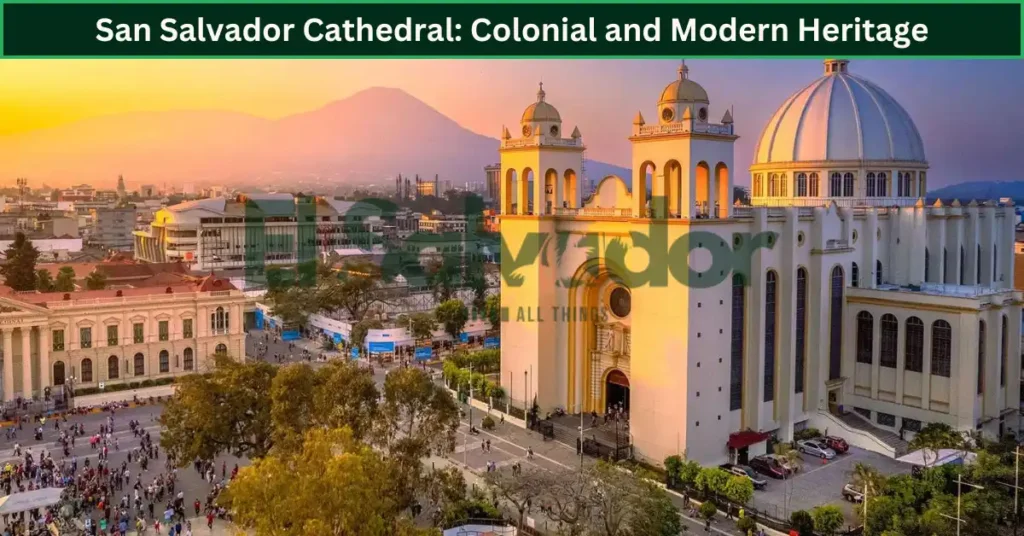
San Salvador Cathedral: A Landmark of Colonial and Modern Heritage
San Salvador Cathedral stands as one of the most important historic churches El Salvador has, and it carries both colonial roots and modern stories. The first cathedral was built in the 18th century, but many earthquakes pushed the city to rebuild it, with the current structure finished in 1999. It also holds the tomb of Óscar Romero, and during the civil war, many people used the cathedral as a safe place and a spot for public mourning.
Key facts:
• Original 1700s cathedral; rebuilt and completed in 1999
• Holds the tomb of Óscar Romero
• Mix of neoclassical front and modern interior
• Important site for major religious and national events
La Merced Church: A Glimpse Into El Salvador’s Colonial Past
La Merced Church El Salvador is one of the oldest colonial church landmarks in San Salvador, and you can feel that history the moment you see it. The first version started in the 18th century, but earthquakes, especially the big one in 1854, forced several rebuilds. Even with all that change, the church kept its mix of Baroque and neoclassical design, the arched front, and the tall bell towers that shape the old city center.
Key facts:
• Began in the 1700s; rebuilt after major quakes, including 1854
• Baroque and neoclassical design with arched façade and towers
• Important part of early urban growth and historic churches El Salvador
El Salvador’s Impact on Latin American History
El Salvador Latin American history shows how a small country still shaped big regional moments. Its politics, trade, and conflicts influenced neighbors and set patterns other nations later followed.
The National Palace: A Symbol of Political History
I always feel a little quiet when I stand in front of the National Palace El Salvador because it tells so much about the country’s political past. The building went up between 1905 and 1911, and its neoclassical style with those Renaissance-looking details makes it feel important right away. Inside, the big rooms like the Hall of Flags and the Blue Room once held major decisions that shaped political history El Salvador still talks about today. It’s a National Historic Monument now, and it keeps old documents and stories that help the country remember where it came from.
Key facts:
• Built from 1905–1911
• Neoclassical architecture with Renaissance touches
• Includes the Hall of Flags and ceremonial rooms used for government events
Monument to the Divine Savior of the World: El Salvador’s National Symbol
I always see the Monumento al Divino Salvador del Mundo as the one landmark in San Salvador that everyone recognizes. It was unveiled in 1942, and the statue of Christ standing on a globe feels like a clear reminder of faith, identity, and the resilience people talk about so much here. It sits right in Plaza Las Américas, and most big national events pass through this spot, so it’s kind of always part of the country’s story.
Key facts:
• Unveiled in 1942 in Plaza Las Américas
• Statue of Christ on a globe over a tall pedestal
• Major national symbol of El Salvador used in civic and cultural events
Safeguarding the Past: El Salvador’s Modern Preservation Efforts
El Salvador has been working hard to protect its history, and you can see it in the way the country takes care of old sites, museums, and local traditions. A lot of this comes from wanting to keep cultural identity alive while also making sure future generations can learn from these places.
Museum of the Word and Image: Protecting El Salvador’s Collective Memory
The Museum of the Word and Image helps keep cultural memory El Salvador alive by saving the stories people lived through, especially during the civil war. It was founded in 1996 by filmmaker Carlos Henríquez Consalvi, and it feels like a place built to remind the country of voices that should never be lost. A lot of the work here focuses on teaching younger generations and supporting community programs.
Key facts:
• Founded in 1996; also known as Museo de la Palabra y la Imagen El Salvador
• Holds civil war archives, photos, oral stories, films, and rare audiovisual materials
• Important center for historical preservation and national education
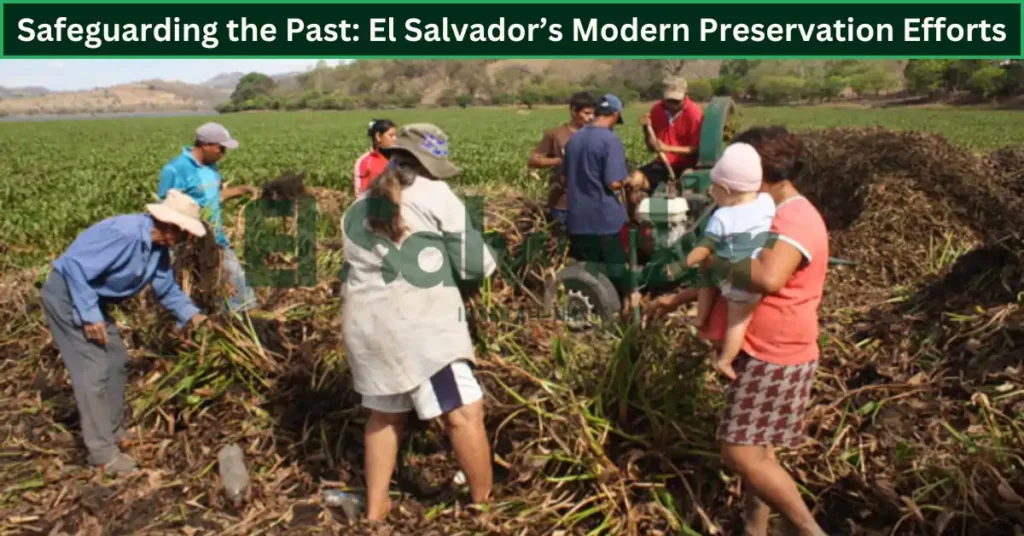
El Salvador’s Laws for Protecting Historical Heritage
El Salvador uses clear rules to protect old sites, artifacts, and anything that carries cultural meaning. These laws help stop looting, keep ruins safe, and make sure the Ministry of Culture El Salvador watches over how digging and restoration happen across the country.
Key facts:
• Ley Especial de Protección al Patrimonio Cultural created in 1993 and strengthened in the 2000s to fight illegal artifact trafficking
• Laws control excavation permits, conservation plans, and archaeological site protection
• Ministry of Culture enforces cultural heritage protection and works with communities to guard local sites
Practical Travel Guidance for Exploring El Salvador’s Historic Landmarks
Visitors usually need a little planning before visiting historical sites in El Salvador, because hours, access, and safety rules can change from place to place.
Best Season for Exploring El Salvador’s Historic Sites
I’ve found that the best time to visit El Salvador really depends on the weather and how many people you want around. Most travelers go in the dry season because it’s easier to walk around ruins and old towns when the skies stay clear.
Key facts:
• Dry season El Salvador (Nov–Apr) is the best time to visit El Salvador for stable weather and good photos
• Rainy season (May–Oct) can make rural roads muddy and slow, affecting access to some sites
• Big holidays like Holy Week bring larger crowds at major landmarks
• Cooler mornings make visiting historical sites more comfortable
How to Reach El Salvador’s Major Historical Sites
Getting around El Salvador is pretty simple, but the best way to reach each place depends on where the site is. Most routes start from San Salvador, so it’s the main hub for heading out to archaeological spots and old towns.
Key options:
• Car rentals give the most freedom for travel to archaeological sites, especially places with short unpaved paths
• Shuttles and tour operators offer easy rides to spots like Joya de Cerén, Tazumal, and Suchitoto, plus helpful history explanations
• Local buses are cheap but slower, and some won’t reach remote sites directly
Local Guides and Tours
I’ve noticed that visiting archaeological sites feels way better when you go with someone who truly knows the stories. Local guides El Salvador are trained to explain things you might not catch on your own, and they make old ruins feel more alive and real.
Why guides help:
• Certified tour guides share accurate history, community stories, and things not written on signs
• Many major sites offer guided tours through the Ministry of Culture, including Joya de Cerén and Tazumal
• Tours add safety, easy navigation, and options for English-speaking visitors
What Natural Landforms Is El Salvador Famous For?
I always think the natural landforms El Salvador has are pretty wild because the whole country sits on the Pacific Ring of Fire. That’s why you see volcanoes, deep lakes, and long coastlines all packed into a small place. The mix makes the country look different every few miles.
Main landforms:
• Volcanoes in El Salvador: More than 23 volcanoes, including Santa Ana (highest at 2,381 m), Izalco, and San Salvador
• Crater lakes El Salvador: Coatepeque and Ilopango, both made by old eruptions
• Sierra Madre mountains: Long ridges and highlands running through the country
• Pacific coastline El Salvador: Cliffs, black-sand beaches, and surf spots like El Tunco
• Rift valleys: Formed by the Central American Volcanic Arc
• Zapotitán Valley: Wide plain with rich volcanic soil
• Lempa River & waterfalls: Big river system plus spots like Los Tercios
Top Waterfalls to Visit in El Salvador
I’ve always liked how the waterfalls in El Salvador show off the country’s volcanic terrain and mountain forests. Many of them sit near small towns, so it’s easy to turn a simple visit into a whole day trip.
Best waterfalls to visit:
• Los Chorros de la Calera (Juayúa): Clear natural pools along the Ruta de las Flores, with community-kept trails
• Los Tercios Waterfall (Suchitoto): Basalt rock columns formed by old volcanic cooling — one of the most unique El Salvador nature attractions
• Tamanique Waterfalls (near El Tunco): Canyon views, multiple drops, and marked trails run by local guides
• Chorros de la Paz (Ahuachapán): Calm mountain pools that families like for easy swimming
• El Chorrerón (San Miguel): Tall, quiet fall in a less-touristy area
• Rio Sapo / El Pital region (Morazán): Eco-tourism zone with cold streams and small hidden falls
Key Archaeological Sites You Must See in El Salvador
El Salvador has some of the most important archaeological sites in Central America, and every time I visit them, I feel like I’m walking through someone else’s old life. These places show how ancient communities farmed, traded, built their cities, and shaped the land long before modern times.
Top sites to visit:
• Joya de Cerén (La Libertad): UNESCO site; a farming village buried by a volcanic eruption around AD 600. And just so the credit is clear, the World Heritage Site database confirms that Joya de Cerén is El Salvador’s only UNESCO World Heritage Site, listed since 1993.
• Tazumal (Chalchuapa): Major Maya ruins El Salvador; active from about 100–1200 AD with big pyramids and long-distance trade links.
• San Andrés Archaeological Site (La Libertad): A ceremonial and political center used between the 5th–9th centuries. The Central America Tourism Agency (CATA) shares that “San Andrés was a major regional center from 600 to 900 A.D., with pyramids, plazas, and exchange areas,” which really explains its scale.
• Cihuatán (San Salvador region): Large post-Classic city from around 900 AD, with plazas, temples, and a wide defensive layout.
• Casa Blanca (Chalchuapa): Small pyramids and a museum showing regional pre-Hispanic history.
• Quelepa (San Miguel): Important early Lenca settlement connected to old eastern trade routes.
These archaeological sites El Salvador has help explain how ancient civilizations shaped the land and how volcanic activity guided where people built their homes and cities.
What You’ll Find at the Joya de Cerén Archaeological Park
Joya de Cerén is a UNESCO World Heritage Site and one of the only places in the Maya world where you can see how ordinary people lived. The whole village was buried by a volcanic eruption around AD 600, and the ash, almost five meters deep in places, kept everyday life frozen in time.
What you can see:
• Residential homes: Preserved rooms showing how families cooked, slept, and stored food
• Community buildings: Kitchens, storage areas, and workshops that reveal ancient daily life
• Agricultural plots: Old planting beds with traces of crops still visible
• Ceramics and tools: Household objects left behind during the sudden evacuation
• Temazcal (steam bath): Rare pre-Hispanic sauna used for relaxation and rituals
• Interpretive museum: Exhibits explaining the eruption, archaeological discoveries, and life inside the preserved Maya village
Joya de Cerén Archaeological Park offers one of the clearest windows into ancient daily life anywhere in the Americas.
Why Joya de Cerén Is Known as the “Pompeii of Central America”
Joya de Cerén gets this nickname because a sudden volcanic eruption around AD 600 covered the whole village in ash, freezing everyday life the same way Pompeii was preserved in Italy. The layer was so thick and fast that almost everything stayed exactly where people left it.
Main reasons:
• Buried by the Loma Caldera eruption around AD 600, just as Pompeii was buried suddenly by volcanic activity
• Preserved Maya village with homes, tools, food storage, crops, and daily objects still in place
• Up to 5 meters of ash protected even seeds, plant remains, and floor imprints
• No human remains found, showing the community escaped quickly before the ash fell
• UNESCO site recognized for exceptional archaeological preservation
• Rare look at ordinary Maya life, not elite temples, making it unique in the region
Joya de Cerén helps researchers understand real daily life in a way almost no other Maya site can.
Traditional Clothing in El Salvador
I always feel like the traditional clothing in El Salvador says a lot about the country’s roots. You see bright skirts, simple woven fabrics, and embroidered tops that mix Indigenous styles with old Spanish touches. I’ve seen people wear these outfits during festivals and local events, and it kind of shows how the past still lives in small everyday moments.
Key facts:
• Mix of Indigenous and Spanish influence
• Worn mostly during festivals, dances, and cultural days
• Colors and patterns change by town or region
Conclusion
I always feel like El Salvador’s history hits you in small moments, the old stones, the quiet churches, the stories people still share. When you move through these places, it’s easy to see how every era left a mark, from the Maya villages to the colonial streets and even the modern memorials that carry hard memories.
And after visiting all these spots, you start to understand how much the past shapes life here today. The country keeps its history close, and that mix of ancient culture, Spanish influence, and modern resilience is what makes exploring El Salvador feel so real and meaningful.
FAQ’s
What is a historical site in El Salvador?
A historical site in El Salvador is any place that shows part of the country’s past, like Joya de Cerén, Tazumal, San Andrés, or old colonial spots such as Suchitoto and La Merced Church. These places help explain how people lived in ancient Maya times and during the Spanish colonial period.
What is El Salvador most famous for?
El Salvador is most famous for its volcanoes, Maya archaeological sites, surf beaches, and rich cultural history. Many travelers know it for places like Santa Ana Volcano, Joya de Cerén, and the black-sand beaches of the Pacific Coast.
What are major historical events in El Salvador?
Some major historical events in El Salvador include:
• Central American independence in 1821
• The coffee boom in the late 1800s
• The Salvadoran Civil War (1980–1992)
• The signing of the Chapultepec Peace Accords in 1992
These events shaped modern politics, culture, and society.
How many UNESCO sites are there in El Salvador?
El Salvador has one UNESCO World Heritage Site: Joya de Cerén, the preserved Maya village buried by a volcanic eruption around AD 600.
Which 2 countries have the most UNESCO sites?
The two countries with the most UNESCO World Heritage Sites are Italy and China, each with over 50 recognized sites.
What is the cultural heritage of El Salvador?
El Salvador’s cultural heritage comes from a mix of Indigenous traditions (mainly Maya and Pipil), Spanish colonial influence, and modern history. You see this blend in the country’s festivals, food, old churches, Maya ruins, and the stories passed down from past generations.
Are there any ancient ruins in El Salvador?
Yes, El Salvador has several ancient ruins. The most important ones are Tazumal, San Andrés, Joya de Cerén, Cihuatán, Casa Blanca, and Quelepa. These sites show how ancient Maya and Lenca communities lived, traded, and built their cities.
What are four famous landmarks in El Salvador?
Four well-known landmarks in El Salvador are:
• Monumento al Divino Salvador del Mundo (national symbol)
• Santa Ana Volcano
• Joya de Cerén (UNESCO site)
• San Salvador Cathedral
These places represent the country’s culture, history, and natural beauty.
Are Salvadorians Mayan or Aztec?
Modern Salvadorans mainly come from a mix of Indigenous groups (mostly Pipil and some Maya influence), Spanish settlers, and other communities over time. The Pipil people were related to the Nahua culture, which shared roots with groups in central Mexico, but they were not Aztec. El Salvador also has Maya sites, but the majority of Indigenous heritage comes from the Pipil.
What is the World Heritage Site in El Salvador?
El Salvador has one UNESCO World Heritage Site: Joya de Cerén, a Maya farming village buried by a volcanic eruption around AD 600 and preserved almost perfectly under ash.