
El Salvador to Guatemala Border Crossing Guide
The El Salvador to Guatemala border crossing can feel confusing the first time, especially if you’re trying to decide between a shuttle and going independently. This guide is for budget travelers and safety-focused travelers alike, and it covers the two main practical route choices, plus a full Las Chinimas and Valle Nuevo walkthrough.
You’ll also see why the Guatemala City transfer part is usually the trickiest piece, whether you’re heading toward Antigua or connecting through other stops like Hachadura and San Cristobal. The border itself is one thing, but the handoff after that is where plans tend to get messy. Here’s the thing, once you know the route options, the rest feels a lot less stressful.
Key Takeaways
- Best route: pick the route with the easier Guatemala City transfer.
- Timing: go early morning, before the day gets hot and busy.
- Documents: passport, travel papers, and anything tied to your border crossing.
- Border receipt: keep it safe, the officer’s stamp can matter later.
- Costs: expect border fees, local transport, and small cash payments.
- Antigua transfer: that Guatemala City switch can be messy, tight, and tiring.
How to Pick the Right El Salvador to Guatemala Border Crossing
The border crossing locations you choose can save hours, or add them. I wish someone had told me that before I heard a taxi driver say, “Wrong crossing, amigo,” while I was still half asleep and smelling strong coffee from a roadside stop.
Best for coastal travelers: Hachadura. Best for Ruta de las Flores travelers: Las Chinimas or Valle Nuevo. Best for Antigua: San Cristobal. That quick filter usually beats guessing.
| Crossing | Best for | Not best for |
|---|---|---|
| Hachadura | Coastal travelers, especially if you’re coming from the west | Trips that start inland and don’t want extra backtracking |
| Las Chinimas / Valle Nuevo | Ruta de las Flores travelers and budget travelers watching transport costs | Anyone aiming for the fastest obvious run to Antigua |
| San Cristobal | Travelers heading to Antigua | Coastal routes that would make you double back |
For solo travelers, I’d keep the choice simple and close to your route, not your wishlist. The bus stops, little shops, and random border chatter can feel calmer when you’re not zigzagging all day.
There are also less common tourist crossings, but they’re usually only worth it if your exact transport lines up. Since border and transport conditions can change quickly, I’d check timing and safety before locking anything in, especially if you’re squeezing the trip into one long day.
Best Time to Cross and Seasonal Conditions
The best time to cross is early in the morning, before the day gets crowded and hot. The extra buffer saved us when a Guatemala City transfer ran slower than planned. Morning crossings also help you finish the route in daylight, which matters on the stretch past Las Chinimas and toward Guatemala City.
- Leave early. Early departures give you more buffer time for border delays and slow buses.
- Plan to finish in daylight. Local transport can be harder to sort out after dark, and the road feels easier to follow in daylight.
- Watch the rainy season. Rain can make roads slower and border timing less predictable.
- Be extra careful on holidays. Border hours and transport links can shift, and waits often get longer.
I still remember the damp air and the smell of wet pavement near the terminal, with taxi drivers calling out before sunrise. That early start gave us room to handle the Guatemala border crossing without rushing, and it made the Antigua leg feel much calmer.
Required Papers and Entry Basics
- Must have: a passport with enough validity for your trip. I saw agents glance at this first.
- Must have: the right visa requirements for your nationality, since entry rules can change by passport.
- Must have: some USD cash for fees, small purchases, or the odd taxi ride after landing.
- Must know: the CA-4 rule gives 90 days in the region, not 90 days in each country.
- May be requested: a vaccine card or other health document, because source notes say these were checked at entry.
- May be requested: your border receipt or other immigration paper if officials ask about your entry record.
Double-check the rules before leaving. Immigration officers can ask for different documents depending on nationality, and the small desk by the border felt a lot less friendly when people were missing paper copies.
Before you go, verify current entry rules with official sources. The U.S. Department of State and the CA-4 framework both note that requirements can vary, and the officer at the window will follow the latest rule set, not last month’s rumor.
Border Crossing Costs and Currency Tips
The border crossing costs are pretty light, and that surprised me. There’s no normal border fee, so most of your budget goes to transport and a little cash handling.
| Cost stage | What to budget | Why it matters |
|---|---|---|
| Pre-border | Bring about $15 to $20 USD per person in cash | Enough for small charges, snacks, and quick decisions without stress |
| Border | No normal border fee | We almost didn’t bring enough cash, but the crossing itself didn’t ask for a standard fee |
| Onward transport | Quoted chicken bus fare was part of the trip budget | This is usually the real cost after you cross |
I exchanged $36 USD for 263 GTQ, and that gave me a rough feel for the USD to GTQ rate at the time. The piles of Guatemala currency were mostly small bills, which helped a lot when paying for quick rides and snack stops.
The best money exchange move was to wait until I had a real need, not too early. Small bills matter because drivers and shop stalls often don’t want to break big notes, and a pocket full of smaller cash made the whole handoff feel calmer.
Las Chinimas / Valle Nuevo Border Crossing Route Overview
For travelers based in Ataco or along the Ruta de las Flores, the Las Chinimas and Valle Nuevo border crossing route is often the most practical choice. It fits well if you’re heading onward to Guatemala City first, then continuing to Antigua. I wish someone had told me to overnight in Ataco before trying this border crossing route, because that early start makes the day feel much easier.
Here’s the thing, this route usually makes sense if your trip is built around western El Salvador. If your plans lean more toward Antigua straight away, this still works, but the first long connection often runs through Guatemala City. For many travelers, that extra stop is the reason they pick this crossing instead of Hachadura.
- Best for: Travelers staying in Ataco or exploring the Ruta de las Flores.
- Route pattern: Las Chinimas or Valle Nuevo, then onward to Guatemala City.
- Next stop: Guatemala City before continuing to Antigua.
- Good to know: Overnighting in Ataco before crossing is the common recommendation.
- Choose Hachadura instead: If your route or timing fits the coastal side better.
So if you’re still deciding between this and Hachadura, I’d think about your base and your departure time first. The right border crossing route is the one that matches where you slept, where you’re headed, and how much daylight you have left.
5.1 By Shuttle Service
The shuttle is the simplest way to get there from Ataco. Gekko Trails Explorer leaves daily at 4:30am, and that fixed departure takes a lot of guesswork out of the morning. If you want less uncertainty and a bit more comfort, this is usually the easiest pick.
A solo traveler often gets the most out of the Las Chinimas shuttle style of trip, because the plan is clear and the timing is set before you even step outside.
- Best for: a solo traveler or anyone who wants convenience and safety
- From: Ataco
- Daily departure: Gekko Trails Explorer at 4:30am
5.2 Going Independently by Public Transport
Public transport is the cheaper pick, but it is also the rougher one.
- Start early and keep the day open. Regional travel guidance usually favors daylight trips, clear routes, and backup plans.
- Take the local bus flow toward the border, then switch as needed for the next leg. Expect at least one bus transfer and a few moments of asking for directions.
- Cross the border on foot, then keep moving on the next bus toward Guatemala City. The handoff can feel messy, but it is the normal independent travel path.
- From there, continue on local public transport until you reach your final stop in Guatemala City.
This is the budget travel version, and it usually feels less comfortable than a shuttle. If you are fine with luggage, delays, and asking strangers which bus is the right one, it can work well.
Hachadura Border Crossing: When It Makes Sense
The Hachadura border crossing usually makes the most sense for coastal travelers moving between El Salvador to Guatemala. It’s the route I’d look at if your trip stays near the beach side of the country, not inland around Ruta de las Flores.
I remember hearing a taxi driver at the coast mention Hachadura like it was the obvious choice, while the hotel desk clerk nodded before I even finished asking. It felt calmer than the inland options, with less route confusion and fewer “wait, which border?” moments.
Shuttle
If you’re booking a shuttle, Hachadura is a common pick for coastal itineraries. It tends to fit travelers who want a direct border plan without detouring far inland.
Independent travel
Independent travel can work here too, especially if you’re comfortable arranging your own transport and timing. I wish someone had told me to match the border with the route I was already on, because that saved me from backtracking and a sweaty, rushed transfer.
Choose this if you’re staying on the coast, crossing from beach towns, or want a simple overland route that skips the Ruta de las Flores detour.
Step-by-Step Guide: Las Chinimas / Valle Nuevo by Public Transport
What to expect: a day of chicken buses, short waits, and a few tiny border puzzles.
- Ataco to Ahuachapan. The first move is simple, and it feels like a normal local run. We caught the public transport from Ataco toward Ahuachapan, with the bus filling up fast and the ride feeling dusty and loud in that classic chicken bus way.What to expect: a busy morning hop, seat hunting, and drivers who know the route by heart.
- Ahuachapan to La Frontera. From Ahuachapan, keep going to La Frontera, which is the last clear stop before the border crossing. Watch for the right transfer point, because this is where people start asking where you’re headed.What to expect: more local traffic, more bag shuffling, and a bus that may pause longer than you want.
- Border formalities. At La Frontera, get off and handle the border crossing on foot. Keep your documents ready, stay calm, and follow the flow of people between the two sides, because this part moves best in daylight and with clear transfer points.What to expect: a short, practical border routine with a lot of walking and little comfort.
- Guatemala City bus. Once across, look for the bus heading to Guatemala City. This was the part that felt most like public transport reality, with mixed luggage, hot air, and travelers double-checking names and destinations out loud.What to expect: a longer ride, more noise, and the kind of bus stop where asking twice is smart.
- Guatemala City to Antigua. In Guatemala City, transfer again for Antigua. That last leg is the easiest once you’re in the system, and by then the day starts to feel familiar, even if your clothes smell faintly like diesel and road dust.
7.1 Bus 249 from Ataco to Ahuachapan
1. Catch Bus 249 from Ataco around 7am for the short ride to Ahuachapan. The fare was reported at the local rate, and the bus was packed, that classic chicken bus squeeze with knees, bags, and morning chatter all jammed together. It’s a quick hop, usually just enough time to watch Ataco fade and the road wake up.
7.2 Bus From Ahuachapan to La Frontera
From Ahuachapan, the border bus for La Frontera is usually short and inexpensive, but the tricky part is the boarding point. There may not be an obvious bus stop or formal station, so ask locals for local directions and follow the flow of people headed the same way.
I almost missed it because nothing looked official. A woman at a small shop pointed me toward the right corner, and a taxi driver repeated it twice before I finally relaxed.
This is one of those moments where people get briefly confused, so asking two people is smart. The route is simple once you’re on the right border bus, with a short hop from Ahuachapan to La Frontera.
7.3 Change USD to GTQ
A small USD to GTQ swap made the border feel easier. The best place to check the exchange rate is usually the Guatemala side, where money changers and local counters can handle border currency for bus fares, snacks, and the first taxi ride.
- Change a little before you cross. A small amount in cash can cut down on hassle once you land on the Guatemala side.
- Compare rates first. The El Salvador side sometimes offers a better exchange rate, so it can be worth asking both sides before handing over your dollars.
- Carry about $15 to $20 USD per person. That usually covers the first stretch without lugging around too much cash.
Keep it simple and not swap everything at once. Banco de Guatemala guidance also says to verify exchange methods and rates before trusting informal money changers, so a quick check can save you a bad deal.
7.4 Exit El Salvador
At the exit El Salvador checkpoint, the immigration stop is usually quick, organized, and friendly. We barely had time to hear the fans humming before they checked our passport stamp and handed over the border receipt at Las Chinimas.
Important: keep the exit receipt for Guatemala entry. I wish someone had stressed that sooner, because that little slip is what proves you finished the El Salvador side. It matters, since border officers on the Guatemala side may ask for it before you move on, and losing it can slow everything down.
7.5 Cross No Man’s Land
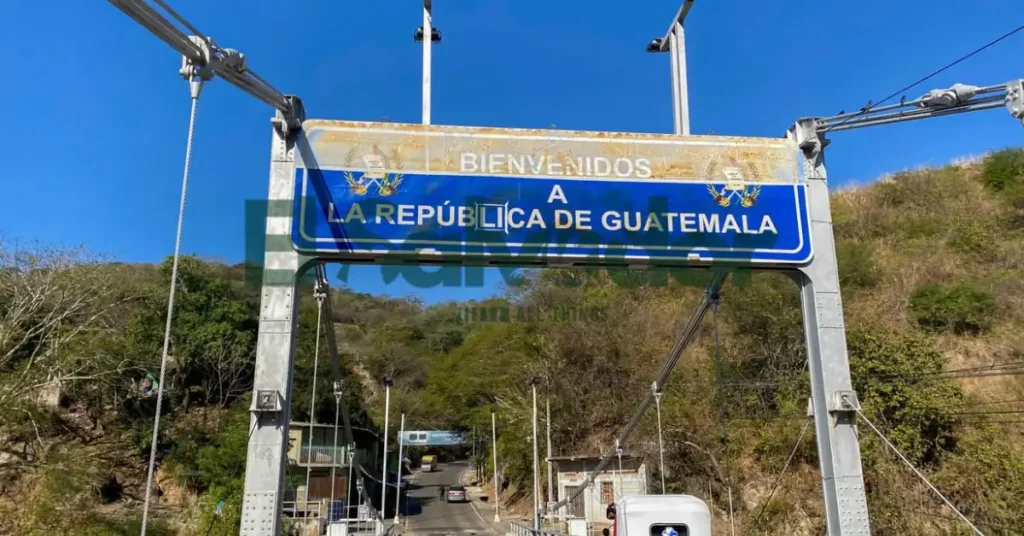
The bridge over the Rio Paz is the real crossing point, and it feels simple once you get there. On both sides, the border crossing area has a steady flow of walkers, tuk-tuks, and a few bored-looking officers doing a police check.
We almost didn’t walk it, but the crossing itself is short and easy in most cases. If you’re carrying light bags, walking usually feels fine, and you get time to take in the river and the dusty roadside buzz. If you’ve got heavy luggage, or you just want less hassle, a tuk-tuk can be worth it for the quick hop across no man’s land.
- Walk if your bags are light and you don’t mind a few minutes on foot.
- Take a tuk-tuk if it’s hot, you’re tired, or your luggage feels annoying.
- Expect a police check and keep your documents easy to reach.
A driver waved us on, someone nearby shouted directions, and the whole thing moved faster than I expected.
7.6 Entering Guatemala
At the border, the first stop was a quick health check. Officials looked for the expected document, and in the source material that meant a vaccine card check before moving on.
After that, we went to the immigration desk for the usual passport process. They checked the passport, asked a few simple questions, and gave a passport stamp on entry. I remember the whole thing feeling calm and a little dusty, with people shuffling forward one by one.
Once the papers were ready, it was usually pretty fast to enter Guatemala. If you do not have the health document officials expect, rules can change, so check current guidance with official immigration or health sources before you travel.
7.7 Chicken Bus to Guatemala City
After immigration, the chicken bus usually waits near the bus stand, and that is where this next road transfer starts. The whole setup felt a little chaotic, but the buses were easy enough to find once we asked a local driver.
- Look for the buses clustered by the stand after border formalities.
- The ride to Guatemala City can take longer than you expect.
- There may be a bathroom stop along the way, so don’t get too comfortable.
The road was bumpy, noisy, and a little dusty, with the smell of diesel hanging in the air. I remember the driver calling out a quick break, and everyone piled out at a roadside stop for snacks and the restroom. That extra pause helped, but the ride still took longer than expected.
Keep cash handy for this leg, plus tissues and a lot of patience. If you’re making an Antigua connection later, this is the part of the day that can throw your timing off, so give yourself a cushion.
7.8 How to Handle the Guatemala City Transfer to Antigua Without Getting Stranded
The Guatemala City transfer is usually the hardest and most confusing part, especially near El Trebol. The handoff can feel messy, with buses slowing, people calling out routes, and everyone trying to decide the right transfer point.
- Expect to get off earlier than you planned. The Antigua bus connection may not stop where you first think, so listen closely and watch where locals hop off.
- Stay alert near El Trebol. That is the tricky transfer point, and it can feel rushed. Keep your bag close and know your next move before the bus stops.
- Ask for a safe drop-off. A simple phrase helps: “Can you drop me at a safe transfer point for Antigua?” That small question can save a lot of stress.
- Have a taxi backup ready. If the timing looks off, or the stop feels wrong, switch to a taxi backup instead of guessing.
- Keep your plan flexible. If you miss the right connection, pause, breathe, and ask a driver or nearby traveler where the next safe pickup is.
Warning: The Guatemala City transfer is not the place to wing it, especially late. Recognized transfer points are safer than uncertain drop-offs, and a confused stop near El Trebol can leave you stranded.
If this happens: if you get dropped too early, do not panic. Move toward people, ask for the next chicken bus or a taxi, and head for a known transfer point. I once heard a hotel clerk say the calmest travelers are the ones who ask twice.
Who Should Take the Shuttle vs Public Transport Route?
If you land late, feel tired, or just want less guessing, the shuttle vs public transport choice gets easy fast. I remember stepping out with a small bag, hearing buses hiss by, and thinking.
- Choose the shuttle if you want convenience, better safety, and a fixed plan. It’s the better pick for solo travelers, first-timers, and anyone arriving after dark.
- Choose public transport if you care most about cost and don’t mind transfers. It suits budget travelers who are fine with a chicken bus, carrying bags, and asking for help in Spanish.
Here’s the blunt version: if you’re new to the route, a prebooked shuttle usually feels calmer and safer. According to official travel safety guidance, the less familiar you are with local transit, the more useful that booking becomes.
Public transport is better for independent travel and saving money, but it asks more of you. You may need to decode stops, handle more transfers, and stay alert the whole way.
Conclusion and final travel note
The El Salvador to Guatemala border crossing is usually simplest by land if you match the route to your plan. For most travelers, Las Chinimas or Hachadura make sense as direct crossings, while anyone heading straight on should watch the Guatemala City transfer closely before aiming for Antigua.
Border hours, bus connections, and the little paper exit receipt can decide whether the day feels easy or messy, and the officials we met were much calmer when our documents were ready.
So if your route is fixed, keep it simple, keep your papers close, and check official travel guidance one more time before you go. If border steps change, send an update so other travelers don’t learn the hard way.
Frequently Asked Questions
What is the easiest way to cross from El Salvador to Guatemala?
The easiest route is usually the Las Chinimas crossing, then a shuttle or bus onward. The morning felt much calmer than later in the day, so leave early.
Which border crossing is best for Antigua?
Las Chinimas is usually the best choice for Antigua. From there, people often connect through Guatemala City or book a direct transfer if they want less hassle.
Do I need a passport to cross from El Salvador to Guatemala?
Yes, bring your passport. Border officers usually check it, and they may also ask about your entry or exit details.
Is there a border fee at Las Chinimas?
There is usually an exit receipt or border tax to pay when leaving El Salvador. Keep a little cash ready, because the small booth can feel busy and a bit rushed.
How early should I cross the border?
Early morning is usually best. The lines are often lighter, and you have a better chance of making same-day connections to Guatemala City or Antigua.
What documents are checked at the border?
Your passport is the main one, and officers may check your exit stamp or receipt too. Sometimes they ask for proof of onward travel, so keep your papers easy to reach.
Can I do the crossing in one day?
Yes, many travelers do it in one day. It feels long, though, because border lines, transfers, and traffic can stack up faster than you expect.
Do I need cash in small bills for the border?
Yes, small bills help a lot. The border can feel busy and informal, and nobody wants to break a large note for a tiny fee.
Should solo travelers take a shuttle instead?
Solo travelers often prefer a shuttle because it removes a lot of guesswork. If you are alone with bags, the quieter ride can feel worth it.
Is the Guatemala City transfer to Antigua difficult?
It can be a little confusing if you are tired and carrying bags. The bus terminals get noisy and crowded fast, so a pre-booked transfer often feels easier after a long border day.