
El Salvador Independence Day: History and Traditions
El Salvador Independence Day is celebrated on September 15, the same date shared by several Central American countries. It marks the 1821 independence period, when the region moved away from Spanish rule, and it remains one of El Salvador’s most important national holidays.
You’ll usually hear brass bands, see blue and white flags, and feel the streets fill early with school parades and family plans. I remember one taxi driver telling me, almost proudly, that everyone seems to wake up with the same idea that day, even if they’re just headed to a small neighborhood event.
We’ll look at the history behind independence, the traditions people keep, the activities that make the day feel alive, and a few practical details for visitors.
Key Points
- The holiday has deep roots and a long local history.
- It falls on the same date across the region, so planning is easier.
- Traditions often include family meals, music, and time outdoors.
- Visitors usually join simple activities, markets, or neighborhood events.
- Today, it still feels personal, with a mix of old customs and new habits.
- Future dates change by year, so check ahead before you travel.
History of El Salvador’s Independence Day
El Salvador’s path to independence started long before 1821. In 1522, Andrés Niño led an expedition into the region, and by 1525 Spain had tightened control over the territory. If you want the broader colonial backdrop, the Central America colonial period helps explain how local life changed under Spanish rule.
By 1609, the area sat inside a larger colonial administration that shaped trade, labor, and daily life. Then, in 1811, the independence movement began to stir in a serious way, and the pressure against Spanish rule grew louder.
The big turning point came on September 15, 1821, when independence was declared through the Act of Independence of Guatemala. According to the Encyclopaedia Britannica, that date marks the independence declaration for much of Central America. It was a formal step, but it did not mean instant full freedom for every province.
El Salvador then stayed tied to the short-lived Mexican Empire until 1823, as historical summaries note. That brief period matters because it shows independence was a process, not a single moment.
El Salvador Independence Day Timeline
- 1522, Spanish expeditions reached the region and started the colonial era, which you can read more about in Central America’s colonial period.
- 1525, settlement and control expanded, and the colonial system began to take firmer shape across the area.
- 1821, local leaders joined the independence declaration, part of a wider Central American break from Spanish rule.
- 1823, the region moved on after the short-lived Mexican Empire period and kept building its own political path.
El Salvador Independence Day Customs
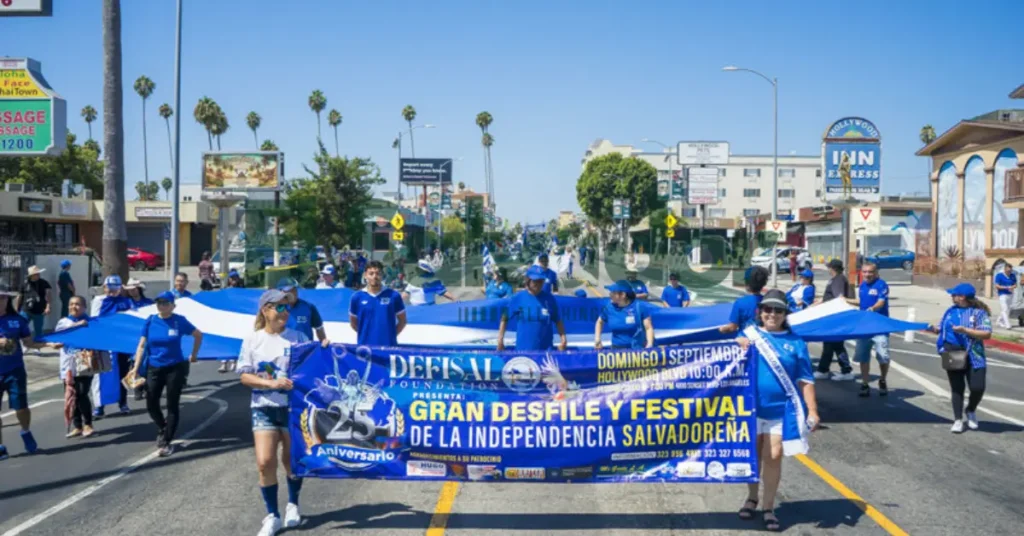
Across El Salvador, Independence Day usually starts with civic ceremonies in plazas, parks, and government buildings. You’ll see officials, teachers, and families gathered for flag raising, speeches, and quiet moments that feel proud and formal.
In towns and cities, flag displays are everywhere. The blue and white colors hang from homes, storefronts, buses, and school gates, and that simple sight gives the day its rhythm. It reminded me of the traditions described in Flag Day, where the flag is more than decoration, it’s part of the whole mood.
Schools play a huge role too. Students often wear uniforms, carry flags, and take part in short programs, poems, and music. According to school and civic event materials from Salvadoran cultural institutions, student participation is one of the most common parts of the celebration.
- Marching bands fill the streets with drums, brass, and sharp stepping rhythms.
- Community celebrations bring neighbors together for local gatherings, music, and food.
- Public ceremonies keep the holiday formal and patriotic, especially in larger cities.
And here’s the thing, the whole day feels shared. A taxi driver once told me the music starts early and never really leaves the air. According to the U.S. Department of State, national holidays in the region often center on civic observances and public ceremonies, and El Salvador fits that pattern well.
El Salvador Independence Day Activities
- Watch the parades and street eventsIndependence Day often starts with music, marching bands, and flags moving down the street. We almost didn’t go early, but that was the best part, since we found a spot near a bakery and heard drums before the crowd filled in.
- Learn the history and cultureSpend time with local museums, school displays, or community talks that explain the holiday’s meaning. Many families bring kids to these events, because the mix of proud faces, old photos, and national colors made Salvadoran culture feel very close and real.
- Prepare breakfast, dinner, and a drinkStart with a breakfast of pupusas from pupusas with curtido, then sit down for dinner with tamales, fried yucca, or carne asada. For a drink, horchata is a common choice, and it tastes especially good when the day gets warm and noisy.
El Salvador Independence Day Across Central America
September 15, 1821 is shared by El Salvador and its neighbors, including Guatemala, Honduras, Nicaragua, and Costa Rica. According to the U.S. Department of State, several Central American nations mark independence on that same date.
That shared date can feel a little confusing, especially if you hear people talk about it like one country’s holiday. But the bigger story is regional. Britannica notes that the 1821 declaration belongs to the wider Central American independence context, while El Salvador’s celebration is still its own national day.
My first September visit, because the street noise, flags, and music made it feel personal and local. So if you want the full picture, it helps to think about both pieces together, El Salvador’s pride and the common Central American history behind it.
What Does El Salvador Independence Day Mean Today?
El Salvador Independence Day still matters because it gives people a shared moment to remember who they are and why that matters. According to civic and educational sources on national holidays, independence celebrations often reinforce shared identity across generations, and that feeling shows up in the flags, music, and family gatherings that fill the day. It is a time for national identity, patriotism, and unity, but also for quiet remembrance and civic pride. If you have ever heard a crowd cheer as a parade passes, you know how a holiday can make a community feel close, even for a few hours.
Research from cultural studies institutions also shows public holidays can strengthen civic pride and collective memory, and that is part of why the day still feels important now. It asks people to look at the country with care, not just celebration, and to see independence as something shared across neighborhoods, families, and generations. Moving the small details can be, the drumbeat, the smell of street food, the way strangers stand a little straighter together.
Travel Tips for Visiting El Salvador During Independence Day
Parade streets get crowded fast, and that’s where we almost didn’t make it on time. Arrive early, because the best spots near the route filled up before the music even started.
- Plan for parade crowds. Public celebrations can get shoulder-to-shoulder, with drum beats, flags, and people cheering from sidewalks. Keep your bag zipped and stay aware of your surroundings, especially near the busiest intersections.
- Expect transportation delays. Taxis, buses, and rideshares may move slower than usual because of road closures and traffic disruptions. According to the U.S. Department of State travel guidance, public events may involve crowds and traffic disruptions. If you have a ceremony to catch, build in extra time and keep your route flexible.
- Wear light, respectful clothes. I wore breathable layers, comfy shoes, and a hat, because the pavement felt hot by late morning. For sun and heat comfort, bring water, sunscreen, and something light that still looks tidy for public events.
- Mind ceremony etiquette. During flag events and formal moments, I noticed locals getting quiet and standing still. Follow their lead, keep your phone low, and avoid talking over the anthem or official speeches.
Truth is, people were friendly when I slowed down and asked where to stand. A hotel staff member pointed me to a calmer corner, and a taxi driver warned me which streets would close first, which saved me a long walk.
5 Cool Facts About El Salvador That Will Blow Your Mind
- The flag and coat of arms are full of national prideEl Salvador’s flag and coat of arms show up everywhere, and they really stick in your memory. I remember a taxi driver pointing them out with a grin, like he’d seen them a thousand times and still loved them.
- Punta Roca and Punta Mango are surf names worth rememberingSurf fans keep talking about Punta Roca and Punta Mango, and for good reason. According to Salvadoran tourism materials, these spots are known for strong waves, salt air, and that sleepy beach-town feel that hits as soon as you step out of the car.
- Coffee helped shape the country’s storyEl Salvador’s coffee history runs deep, and you can still feel it in the smell of fresh beans in local shops.
- Archaeological parks hold some of its oldest treasuresPlaces like Joya de Cerén and Tazumal make archaeology feel alive, not dusty. According to UNESCO and archaeological references, these heritage sites are important stops if you want to see ancient life, stonework, and quiet park paths that almost make you whisper.
- San Salvador makes a bold oldest capital claimSome people point to San Salvador as the oldest capital claim in the region, and that alone sparks plenty of debate. I heard locals mention it over coffee, and the pride in their voices made the claim feel just as lively as the city itself.
Why We Love El Salvador Independence Day
- Freedom matters. The day feels open and proud, like a deep breath after a long wait.
- We remember our history. The music, colors, and quiet moments keep the past close without making it heavy.
- We feel love for the country. According to cultural research on national holidays, celebrations often serve as moments of reflection and communal pride, and that feeling shows in every smile.
That mix of joy and memory is what stays with us. According to general civic studies, remembrance and shared rituals help reinforce national identity, and you can feel that in the way people stand together.
El Salvador Independence Day Dates
| Year | Date | Day |
|---|---|---|
| 2026 | September 15 | Tuesday |
| 2027 | September 15 | Wednesday |
| 2028 | September 15 | Friday |
| 2029 | September 15 | Saturday |
| 2030 | September 15 | Sunday |
Closing Thoughts
Central America Independence Day carries the history of 1821, when several countries in the region moved together toward freedom. That shared start still matters, because it ties the holiday to a wider Central American story, not just one nation’s past.
Across streets, schools, and town squares, people mark the day with parades, flags, music, and family time. That mix of historical roots, regional unity, and cultural observance gives the holiday real meaning today.
It still matters because it keeps memory, identity, and pride present for new generations.
Frequently Asked Questions
Why does El Salvador celebrate Independence Day on September 15th?
El Salvador celebrates on September 15 because that is the day Central America declared independence from Spain in 1821. The date is shared across several nearby countries, so it feels like one big regional memory.
What happened on September 15, 1821?
On September 15, 1821, Central America declared independence from Spain. It is the key independence date for much of the region.
Why is September 15 important in Central America?
September 15 marks the shared independence date for much of Central America. It is a rare moment when several countries remember the same turning point together.
What are common El Salvador Independence Day traditions?
Common traditions include parades, flag ceremonies, school bands, and patriotic songs. Streets can smell like snacks and smoke from food stalls, and the sound of drums carries for blocks.
What are the best things to do on El Salvador Independence Day?
The best things to do are watch the parades, visit public ceremonies, and join local family gatherings.
How is El Salvador Independence Day celebrated in schools?
Schools usually hold flag ceremonies, student parades, and performances of national songs. The whole block can feel awake before sunrise when the brass band starts warming up.
What should travelers know before attending Independence Day events in El Salvador?
Holiday events can mean crowds, road closures, and slower transportation. Leave early, because even a short ride can take much longer.
What is the meaning of independence today in El Salvador?
Today, independence still stands for identity, memory, and national pride. It connects the past to everyday life, from school flags to family talks about Central American history.