
Salvadoran Music & Dance: Traditions, Styles, Roots, and Modern Life
Salvadoran music and dance are living traditions, shaped by Indigenous roots, Spanish colonial influence, African rhythms, and newer urban sounds. They show up at village fiestas, family parties, religious celebrations, and the kind of street events where the drums start first and everyone else catches up.
Some styles feel old and earthy, others are loud, glossy, and modern. You can usually spot them by the instruments, the steps, and the mood in the crowd. A marimba here, a brass band there, a spinning skirt, a fast footwork pattern, and suddenly the whole place feels awake.
One town may lean into folk dance, another into cumbia or rancheras, and another into a ritual performance that still carries Indigenous memory. So if you’ve ever wondered what makes Salvadoran music and dance distinct, start with the roots, then watch how they keep changing right in front of us.
Key Points to Remember
- Honduran music blends Indigenous roots, Spanish influence, and African heritage.
- The main styles include folk, social dance music, and ceremonial traditions.
- Folk music is tied to local stories and daily life, while social music gets people dancing fast.
- Ceremonial performance is more formal, often linked to ritual, identity, and community memory.
- Cumbia and punta stand out as crowd favorites with deep cultural weight.
- Regional style changes a lot, and diaspora communities keep the music moving in new ways.
What Is Salvadoran Music and Dance?
Salvadoran music and dance cover a lot of ground. They include folk, ceremonial, social, and popular performance traditions, and those labels often overlap depending on the community and the moment.
There is no single one-size-fits-all national style. The Ministry of Culture of El Salvador points to the country’s regional and historical diversity, and that really matters here. A dance heard at a village fiesta can feel very different from one performed on a stage in the capital.
In plain terms:
- Folk traditions come from local custom and memory.
- Ceremonial traditions are tied to religious or community events.
- Social dances show up at parties, parades, and celebrations.
- Popular performance includes newer styles shaped by wider audiences.
That mix is the point. One song, one costume, or one dance step can mean different things in different towns.
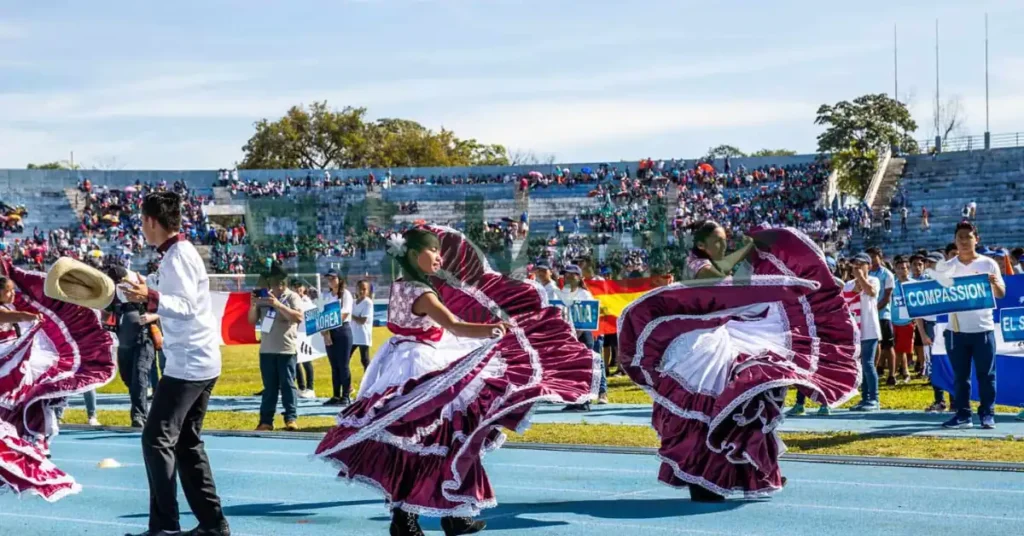
The Cultural Roots Behind Salvadoran Performance Traditions
Salvadoran performance traditions come from layered Indigenous, Spanish colonial, and African histories. The Ministry of Culture of El Salvador and academic Latin American musicology sources both point to that mixed heritage, but the details vary by place and community.
So here’s the careful part: specific survivals depend on local evidence. We should not force a single origin story where there wasn’t one. These traditions changed over time through mestizaje, adaptation, and plain old survival.
Indigenous Foundations and Living Memory
Before colonial rule, Indigenous communities shaped ritual movement, music, and ceremony across the region, including traditions connected to the Náhuat language and native cultural memory. Some practices may still echo in masks, dance patterns, instruments, and festival timing, though the evidence is uneven.
Traditions can keep moving, like drums in a crowded plaza, while still carrying older meanings.
Spanish Colonial Layers and Local Adaptation
Spanish colonization brought Catholic feast days, courtly dances, and new performance forms. Local communities did not simply copy them. They bent them, mixed them, and made them theirs.
That’s why many Salvadoran performances feel both familiar and surprising. You may hear sacred themes beside satire, or see formal steps mixed with playful gestures and loud community energy.
African Presence and Mestizaje Through Time
African histories also belong in this story, even when the record is thin. Their influence appears through rhythm, movement, and broader cultural blending, especially in the wider Pacific and colonial world.
The result is mestizaje, not a neat recipe. It is a living blend, shaped by migration, coercion, faith, family, and local creativity.
Indigenous Musical and Dance Traditions
In many Indigenous communities, ritual dance and ceremonial music have long been tied to agriculture, rain, and harvest time. The Nahua and Lenca are often named in these conversations, though the surviving record is uneven, so some details are better documented than others.
What stands out is continuity. These traditions have survived through community life, church influence, and plain old stubborn memory, even as they adapted to new times and new pressures.
Spanish Colonial Impact on Instruments and Dance Forms
Spanish colonial rule brought new sounds, but it did not wipe out local ones. The guitar and violin became common in many communities, especially where church music and town celebrations mixed with older traditions.
What changed most was the shape of performance. Religious festivals often included music and dance that followed European patterns, yet local rhythms, steps, and costumes stayed in the mix.
- Guitar: Often used in homes, plazas, and festival music, thanks to European colonial influence.
- Violin: Added to church and community music, giving some dances a new sound without erasing older styles.
- Procession: A key part of many festivals, where music, քայլ, and movement came together in public streets.
- Blending: Local forms adapted to Spanish colonial structures, but they stayed recognizably local.
That mix is the real story. You hear Europe in the instruments, but you still feel the older heartbeat in the dance steps. A museum overview of Spanish colonial art and culture shows how this blending shaped daily life, especially in religious and public celebrations.
African Influence in Salvadoran Rhythm and Movement
One common miss in general travel writing is the African diaspora sitting right under Salvadoran rhythm. Coastal traditions kept a lot of that memory alive, especially in dance and drum-driven celebrations that feel built for shared movement, not polite watching.
The heartbeat is in the percussion and syncopation. You hear it in the off-beat push, the quick accents, and the way a room answers back before the singer finishes a line. That call and response energy makes the music feel communal, like the crowd is part of the band.
The real story often sits in the rhythm, in the feet hitting the floor, the hands on drums, and the sandy, coastal feel that ties movement to memory.
The Most Recognized Salvadoran Music Styles
Salvadoran music is best judged by sound, setting, and social function, not by one fixed national template. That matches what the Ministry of Culture and university ethnomusicology sources keep saying, and honestly, it makes life easier when the drum starts and everybody at the party already knows what’s coming.
| Style | What it sounds like | Where you hear it | Type | Recognition lens |
|---|---|---|---|---|
| Cumbia | Dancey, bouncy, with a steady beat, bright percussion, and catchy accordion or brass lines. Salvadoran cumbia can feel more local and party-ready than broader Colombian cumbia, which is often tied to older coastal traditions. | Street parties, buses, radio, family celebrations, and loud weekend gatherings. | Modern commercial, with deep popular roots. | If the rhythm feels made for dancing fast with a grin, it’s probably cumbia. |
| Punta | Fast drums, sharp accents, and an intense drive that gets people moving right away. It feels like the music is tapping you on the shoulder and then pulling you onto the floor. | Garifuna celebrations and cultural events, especially in communities linked to Garifuna culture. | Regional and ceremonial, with living community roots. | Watch the hips and feet, then listen for the pounding drums. If it’s urgent and communal, that’s punta. |
| Marimba traditions | Warm, wooden, melodic, and often softer than a big party band. The sound is earthy, with notes that feel hand-made instead of flashy. | Festivals, cultural showcases, schools, and heritage events. | Regional and ceremonial, sometimes staged for audiences. | If you hear wooden keys ringing like a friendly echo, you’re likely hearing marimba. |
| Folkloric music | Varies a lot, but often uses regional rhythms, traditional instruments, and songs tied to memory, work, or identity. | Civic events, school performances, town festivals, and cultural presentations. | Regional and staged. | If the performance feels like heritage being displayed on purpose, that’s folkloric music. |
| Popular or party music | Anything from tropical dance beats to current commercial hits. It usually leans loud, simple, and easy to sing along with after one drink too many. | Weddings, bars, buses, nightclubs, and neighborhood parties. | Modern commercial. | If the speaker is booming and people know the chorus before it starts, you’re in party-music territory. |
At one roadside party, the taxi driver heard three seconds of percussion and just laughed, like, “Ah, that one gets everybody.” That’s the trick. In El Salvador, music often tells you the crowd, the region, and the mood before anyone says a word.
Cumbia in El Salvador
Cumbia in El Salvador is a lively social dance music style that took root and then got its own local flavor. You hear it at birthdays, village parties, dances, and family gatherings, where the floor fills up fast and nobody stays seated for long.
- How it’s performed: Couples and groups dance to a steady, easy-to-follow rhythm, with lots of hip movement and playful steps.
- Where it shows up: It appears at patron saint festivals, weddings, community events, and weekend parties across towns and neighborhoods.
- How bands differ: Some groups lean on bright brass and drums, while others keep it lighter with keyboards, guitar, or accordion.
- Local variation: Town by town, the tempo, song selection, and dance style can shift a bit, which keeps things feeling personal.
- Generational change: Older bands often favor classic arrangements, while younger players may mix in modern sounds and faster beats.
Truth is, cumbia here feels less like a strict tradition and more like a shared memory that keeps getting remixed. You can hear that in the horns, the drum pattern, and the way people smile when the first familiar notes hit. It’s music made for moving, talking, laughing, and staying out one song longer than you planned.
Punta and Its Cultural Significance
Punta is a fast, high-energy Garifuna dance and music tradition heard across parts of Central America. It carries deep cultural meaning, especially in communities in Belize, Honduras, Guatemala, and Nicaragua, where Garifuna people keep the rhythm alive at celebrations, dances, and gatherings.
The beat is sharp, the hip movements are quick, and the room usually gets loud fast. Here’s the thing, people sometimes talk about punta like one place owns it. That’s too simple. According to Garifuna cultural organizations, UNESCO, and academic sources, punta belongs to a broader Central American Garifuna tradition, with shared roots and local styles across the region.
- Cultural origin: Punta comes from Garifuna communities and is tied to their language, music, and social life.
- National adoption: It is widely embraced in Belize and also recognized in other Central American countries with Garifuna populations.
- Modern popular use: Punta shows up in festivals, parties, and popular music, while still keeping its cultural core.
And yes, it can be wildly fun. But even when the bass shakes the floor and everyone’s sweating by the second song, punta still carries memory, pride, and a strong sense of belonging.
Marimba, Folk, and Ceremonial Repertoire
Marimba music often sits right at the center of community celebrations, where the sound is bright, loud, and hard to ignore. I remember hearing it spill out from a plaza while kids chased each other past the food stalls, and the whole place smelled like smoke, flowers, and fried dough.
That same tradition also includes folk repertoire and ceremonial songs tied to local histories, family events, and religious moments. You’ll hear traditional instruments like marimbas, drums, and rattles, but the mix changes from town to town, and that’s the point. There is no single fixed national repertoire, just a living set of styles that shifts with place and occasion.
In practice, a song can move from ritual to entertainment without much fuss. A tune used in a ceremony might show up later at a wedding, a patron saint day, or a neighborhood dance, which is why ethnomusicology sources and regional cultural archives matter so much. They help track how marimba music and folk repertoire stay rooted in community life while still changing with each generation.
If you want more context, local archives and oral-history collections are usually the best starting points: Smithsonian Folkways and regional cultural repositories often preserve recordings, notes, and program materials from community celebrations.
How to Spot Salvadoran Music and Dance in Real Life
Fast cumbia usually hits first. If the crowd starts bobbing, the bass feels bouncy, and the percussion stays bright, you’re probably hearing cumbia, not a slow folk tune pretending to be one.
| Style | Tempo | Percussion | Instrumentation | Dance energy | Common context |
|---|---|---|---|---|---|
| Cumbia | Medium to fast, steady pulse | Drums, guiro, upbeat accents | Often accordion, keyboards, brass, electric bass | Loose, social, swaying, lots of hips | Parties, live bands, dance nights, street events |
| Punta | Fast and driving | Strong hand drums, marked rhythmic hits | Drums lead, with vocals and sometimes modern backing | Sharp, energetic, fast footwork and hip motion | Stage shows, celebrations, cultural events |
| Marimba-based pieces | Usually steady, often moderate | Less drum-heavy, more melodic rhythm | Marimba is the star, sometimes with bass or light accompaniment | Can be calm or elegant, less club-like | Formal events, regional performances, cultural programs |
| Staged folk dance | Changes by number, often controlled | Music follows choreography, not the other way around | Traditional instruments or mixed arrangements, costumes matter too | Precise, rehearsed, big gestures, clear patterns | Theater, festivals, school groups, ministry events |
Here’s the thing, cumbia tends to feel like a moving car with the windows down. Punta feels sharper and hotter, with feet and hips hitting hard on purpose. Marimba usually sounds sweeter and more open, and staged folk dance looks polished, like everybody knows the next move before the music starts.
A modern group might add keyboards or louder drums, while an older group may sound leaner and more traditional.
- Listen for the beat. Cumbia is bouncy, punta is urgent, and marimba pieces feel more melodic.
- Watch the feet. Punta usually moves fastest, while staged folk dance looks most rehearsed.
- Check the setting. Party, plaza, theater, or school event can tell you a lot fast.
If you hear a taxi driver humming along, or see kids copying the steps near the snack stand, that usually means the style has landed in real life, not just on a stage. A little sweat, a lot of rhythm, and maybe one loud speaker that rattles your teeth, that’s the clue.
Folk Dance for Stage and Festival Performance
Folk dance on stage looks different from the version danced in a village square or family courtyard. The music stays rooted in the same tradition, but the spacing, timing, and entrances are usually tightened for an audience watching from seats instead of standing in the dust with everyone else.
Costumes do a lot of the talking. You’ll often see bright woven cloth, head wraps, beads, bells, shawls, or regional embroidery that catches the light. The clothes are not just pretty, they signal place, age, season, or social role, and the sound of ankle bells or rustling fabric can be part of the rhythm.
- Formations: circles, lines, pairs, and rows help the group read clearly from a distance.
- Symbolic gestures: hand waves, lifted steps, bowed heads, and stamping feet can point to harvest, welcome, prayer, or play.
- Festival staging: programs often shorten dances, keep key steps, and add lighting or a cleaner entry so the crowd stays with it.
Festivals matter because they keep dances alive while giving them a fresh room to breathe.
Authenticity note: community-recognized does not always mean unchanged. A dance can still be real, respected, and deeply local even if it has been trimmed, polished, or rearranged for a stage. Festival programs and cultural ministry resources are often the best place to check how a performance connects back to its community roots.
Social Dancing at Parties, Weddings, and Community Events
Social dancing shows up where people actually live, eat, and laugh. Think family gatherings, weddings, town celebrations, and even nightlife, where the music gets loud and nobody cares if your steps are perfect.
That’s the fun part. People improvise, follow a cousin’s lead, then jump back in when the beat changes.
In many places, everyday dancing is culturally important too. It keeps traditions moving, brings people together, and makes a room feel alive, even if the floor is just a scratched-up kitchen or a crowded street corner.
Ceremonial and Religious Dance Traditions
Some dances are tied to saints’ days, processions, and local feast calendars. You’ll often hear drums, bells, or a small band leading the way, while families line the streets and the air smells like candles, dust, and food from nearby stalls.
These dances usually belong to community rituals first, not a stage show. It changes how you watch, where you stand, and how quiet you keep your camera.
In many places, the movement is devotional. It may honor a patron saint, mark a prayer, or accompany a procession through the neighborhood, and some groups perform only for that sacred setting, not mainly for tourism or entertainment.
So if you join a festival, treat it with care. Ask before taking photos, stay out of the path, and follow the locals when they pause, sing, or kneel. That respect matters more than any perfect picture.
Instruments, Costumes, and Performance Notes
Cumbia usually brings accordion, drum, maracas, and guache, while modern bands may add bass, keyboard, and brass. The sound feels bright and bouncy, like a street party with dusty shoes and a sweet, tired grin.
| Style or setting | Common instruments and features |
|---|---|
| Cumbia-associated | Accordion, drums, maracas, guache, and sometimes bass or keyboard. The modern additions give it more volume for big stages. |
| Punta and percussive styles | Drums, hand percussion, clapping, and fast footwork. The beat is the star, and the crowd usually feels it in their ribs. |
| Marimba and folk ensembles | Marimba, drums, shakers, and other local folk instruments. For a quick primer, see the marimba article or a musical instruments glossary. |
| Ceremonial settings | Fewer flashy additions, more drums, chanting, and community response. The setup tends to stay close to local tradition and ritual use. |
Costumes do more than look good. Bright skirts, woven cloth, beads, headwraps, and simple shirts can signal region, pride, or status, while also giving dancers room to move and stay cool. I stood too close to a spinning skirt and got a face full of fabric and perfume.
In most performances, dress helps tell you what kind of event you are watching. Museum collections, cultural ministry guides, and instrument-focused educational sources often show the same thing, style by style, the clothes are symbolic, but they also have to survive heat, sweat, and long dances.
Where Salvadoran Music and Dance Are Seen Today
Salvadoran music and dance still show up everywhere, from big festivals to tiny backyard cookouts. According to event organizers, cultural institutions, and diaspora groups, these traditions stay active in El Salvador and abroad.
You’ll see cumbia, folkloric dance, and live bands at national holidays, school events, and community gatherings. Sometimes it’s polished and formal. Other times it’s a loud speaker, plastic chairs, and someone yelling, “one more song,” because the party is not done yet.
Many of these performances are tied to larger festivals in El Salvador, where music, dance, religion, and community traditions all come together. Schools also keep them alive through recitals, independence day programs, and student dance groups that rehearse until the floor feels sticky with sweat and old polish.
Families also keep these traditions alive through gatherings similar to traditional Salvadoran family Sundays, where food, music, and conversation all blend together. Community centers and cultural preservation groups often host workshops, performances, and music nights that keep older styles from fading into the background.
Social media has made this even more visible. Short videos of dance rehearsals, live bands, and holiday performances travel fast, and diaspora communities use them to share songs, costumes, and memory across borders.
Continuity in the diaspora
- United States: Family parties, community festivals, and church events often include Salvadoran music and dance.
- Canada and Mexico: Cultural groups and holiday gatherings keep traditions active for younger generations.
- Online: Diaspora artists post performances, rehearsals, and celebration clips that connect relatives far from home.
So yes, the music is still moving. It just shows up in new places now, with the same beat and the same pride.
How to Learn, Enjoy, and Respect Salvadoran Music and Dance
Salvadoran music and dance can go from soft guitar lines to a full-room cumbia shuffle fast.
- Identify the style first. Ask what you are hearing, because not every rhythm is the same. People may point you toward cumbia, marimba, or a local folk performance, but do not label everything as folk without context.
- Watch respectfully. Stand back, follow host cues, and wait until others invite you in.
- Ask before photographing. A quick question saves a lot of awkward faces. Local performers and families usually appreciate the courtesy.
- Learn where people learn. Try local arts schools, community groups, and cultural centers, or watch online performances from Salvadoran artists when you cannot be there in person.
- Join slowly. Start with hand claps, simple steps, or just following the beat. If the energy is high and you are sweating through your shirt, you are probably doing it right.
Here’s what happened to me in a small hall with sticky soda on the floor and a speaker crackling in the corner. A local organizer smiled, nodded toward the dancers, and used a few phrases similar to the expressions covered in this guide to 10 Salvadoran slang words to help visitors feel included. That kind of cue matters, and it is part of good travel manners too, so a quick read of an etiquette guide for Salvadoran travel can help before you go.
For classes and community events, check with local arts schools, neighborhood groups, and Salvadoran community organizations. If you are learning from afar, online performances are a solid start, but listen with care and learn the names of the styles before you start repeating them like you invented them.
Common Misconceptions About Salvadoran Music and Dance
- Myth: Salvadoran music is just cumbia. Reality: Cumbia is popular, sure, but it sits beside many other sounds. People also hear folk rhythms, marimba, regional bands, and newer styles shaped by migration and city life.
- Myth: Punta is only one fixed dance. Reality: Punta can look and feel different depending on the community, the performance, and who is dancing. Like a good song on a loud street, it changes shape without losing its beat.
- Myth: Folk dance is always ancient and unchanged. Reality: Folk dance usually carries older roots, but it is not frozen in time. Costumes, steps, and music often shift through teaching, stage shows, festivals, and everyday community use.
- Myth: Tradition means the same thing everywhere. Reality: Salvadoran music and dance often move across towns, family networks, and borders. That travel matters, because people bring songs home, remix them, and make them fit real life.
I heard a rehearsal room full of drums, laughter, and someone calling out counts over a dusty floor. The mix felt alive, not locked in a museum.
So yeah, traditions here usually evolve. They stay rooted, but they also breathe, argue, and adapt with the people who keep using them.
How Salvadoran Music Differs from Neighboring Latin American Traditions
| Tradition | How it tends to sound in El Salvador | Nearby regional pattern |
|---|---|---|
| Salvadoran cumbia | Usually leans into danceable, party-ready arrangements, with a local flavor that feels less polished and more street-level than some bigger commercial scenes. | Colombian cumbia is the original reference point, while Guatemalan and Honduran popular cumbia often shares the same regional mix of brass, percussion, and social dance use. |
| Folk performance | Often feels tied to small-town celebrations, civic events, and local identity, with simple instrumentation and strong community roots. | Across Central America, folk traditions often overlap in instruments and forms, but each country keeps its own local songs, dances, and performance settings. |
| Garifuna traditions | In El Salvador, Garifuna music is part of a wider Afro-Indigenous Caribbean heritage, with heavy drumming and call-and-response styles that stand out from mainstream national pop. | Garifuna traditions are shared across Belize, Guatemala, Honduras, and parts of the wider Caribbean coast, so the links often run more along the coast than by national borders. |
Compared with some larger Latin American music scenes, Salvadoran styles often feel more local and community based. That was the part I kept hearing from people, from a taxi driver in San Salvador to a shop owner who knew every neighborhood rhythm by name.
Here’s the thing, the differences are usually about context as much as sound. Salvadoran music often sits between Central American shared patterns and distinct local traditions, while Garifuna music keeps a stronger Afro-Caribbean pulse, with roots discussed in university and regional studies of the Garifuna cultural heritage and broader Central American music research from institutions like the University of Texas Latin American studies collections.
Regional Variations Across Coastal, Rural, and Urban Communities
Coastal traditions often move with the tide. You might hear boat songs, fish-market rhythms, or drums that fit a harbor crowd better than a big stage.
In inland rural communities, performance style can feel slower and more tied to local ceremony. I once heard a taxi driver call it “music for people who know each other,” and that stuck with me.
- Coastal settings: Repertoire may reflect seafaring life, trade, and migration. Instruments and costumes can borrow from port contact and salty daily work.
- Rural areas: Songs often stay close to farming seasons, village rites, and family events. Movement and dress may be simpler, with strong local memory behind them.
- Urban communities: Performances can get louder, faster, and more mixed. City stages, nightlife, and youth audiences often push styles toward new blends.
- Diaspora contexts: Tradition may be kept alive abroad, but it also changes. People adapt songs, outfits, and instruments to new rooms, new crowds, and homesick hearts.
Urban settings can make old forms feel a little scrappy, in a good way. A market stall, a wedding hall, or a street corner might all shape the same piece differently.
And diaspora groups often carry a sharpened sense of memory. The smell of cooking oil, a borrowed speaker, and one uncle clapping off-beat can turn a performance into a small time machine.
There is no single nationwide norm. Geography changes the repertoire, the instruments, the costumes, and even the social job of the performance.
People travel, marry, trade, and share everyday language too, which is why regional expressions and Salvadoran slang often shift between communities and generations.
Why Salvadoran Music & Dance Still Matter
Salvadoran music and dance are still alive because people keep singing, drumming, and moving through everyday life. They carry identity, memory, and community in ways a museum label never could. I remember hearing music spill out of a small gathering, smelling grilled food, and thinking, yeah, this is history with a heartbeat.
These traditions also adapt without losing their roots. In towns and across the diaspora, families, neighbors, and younger artists keep the rhythms going, even when migration changes the map. A taxi driver once told me, bluntly, that if the songs stop, the stories get messy fast.
That is why appreciation matters so much. Globalization can scatter people, but it can also spread pride, and preservation keeps the thread from snapping. If we keep listening, dancing, and passing these forms on, Salvadoran culture stays present, not frozen, and still belongs to the people who live it.
Frequently Asked Questions
What is the main music in El Salvador?
Salvadoran music is usually a mix of cumbia, ranchera, marimba, and folk styles. Cumbia is the one people hear a lot at parties, buses, and festivals, so it often feels like the main one.
What is the traditional music and dance in El Salvador?
Traditional Salvadoran music includes folk songs, marimba music, and dance styles tied to local festivals. The dances often match the region, the celebration, and the story being told.
What are the cumbia groups in El Salvador?
El Salvador has had popular cumbia groups and orchestras over the years, especially in dance halls and holiday events. For the history side, see cumbia history for more context on how the style spread.
What is El Salvador’s national dance?
There is no single dance officially recognized as the national dance in the same way some countries name one symbol. In practice, folk dances and community dances vary by town and celebration.
Do they dance punta in El Salvador?
Yes, punta is danced in El Salvador, especially in Garifuna communities and cultural events. It is fast, lively, and loud enough to make your feet move before your brain catches up.
What are 10 types of dances?
Ten common dance types include folk dance, social dance, ceremonial dance, ballet, salsa, cumbia, punta, merengue, tango, and hip-hop. In El Salvador, cumbia, punta, and folk dances are the names you hear most often.
What is the most famous dance in El Salvador?
Punta is one of the most famous dances linked to El Salvador. Folk dances also stay popular, especially during festivals and school events.
Is punta Salvadoran or Garifuna?
Punta is Garifuna in origin, and the Garifuna people are central to its history and meaning. In El Salvador, it is part of Garifuna cultural life, especially along the Caribbean coast.
What is the difference between cumbia and punta?
Cumbia usually has a smoother, steadier beat, while punta is faster and more intense. Cumbia is common across many Latin American settings, but punta is strongly tied to Garifuna identity and performance.
What instruments are used in Salvadoran music?
Salvadoran music often uses guitar, marimba, drums, bass, accordion, and brass instruments. In Garifuna music, drums are especially important and carry the rhythm hard enough to shake the room.
What are some traditional Salvadoran dances?
Traditional dances include folk dances from local festivals, courtship dances, and Garifuna punta. Many are still performed during holidays, school programs, and town celebrations.
Where can I see Salvadoran music and dance?
You can see it at local festivals, cultural centers, community events, and national celebrations. It also shows up in diaspora gatherings, where the music gets louder and the food smells even better.
Is Salvadoran folk dance still performed today?
Yes, Salvadoran folk dance is still performed today in schools, festivals, and public celebrations. It has not disappeared, even if some performances now feel more staged than old village nights.
How did Spanish and African influences shape Salvadoran music?
Spanish influence brought guitars, melody patterns, and dance forms tied to Catholic festivals. African influence shaped rhythm, percussion, and movement, especially in Garifuna traditions and coastal music.
Is punta originally Salvadoran?
No, punta is not originally Salvadoran. It comes from Garifuna culture, which spans several Central American countries, including communities in El Salvador.
How do I know if a dance is ceremonial or social?
Ceremonial dances are tied to rituals, religious events, or special community meanings. Social dances are usually for fun, celebration, and group participation, so the mood feels looser and less formal.