Working to Keep Náhuat Alive: Protecting the Language of El Salvador’s Pipil People
Náhuat is the indigenous language of the Pipil people in El Salvador, and it is not the same as Nahuatl in Mexico. Children are learning it through early immersion, because language experts and UNESCO-style vitality frameworks point to childhood transmission as one of the strongest signs a language can survive into the next generation.
Key Takeaways
- Náhuat is endangered in El Salvador, so every spoken word matters.
- Children start young, because early learning sticks best.
- The immersion model uses daily language, songs, and play.
- Family use at home matters, or the language stays in class only.
- The program needs steady support from schools and the wider community.
- Success means more fluent speakers, not instant full recovery.
At Risk of Disappearing: The Threat to Indigenous Languages
Across Latin America, indigenous languages are under pressure in almost every region. FILAC has warned that most of the region’s indigenous languages are threatened at some level, and many are losing speakers fast. In daily life, Spanish or Portuguese often take over at school, in the market, and even at home.
That shift matters because languages survive through intergenerational transmission, the handoff from parents and grandparents to children. When kids stop hearing a language early, it can fade from play, songs, and family talk, then from memory itself. UNESCO’s language vitality work shows that once children are no longer learning a language as their first language, its risk of extinction rises sharply.
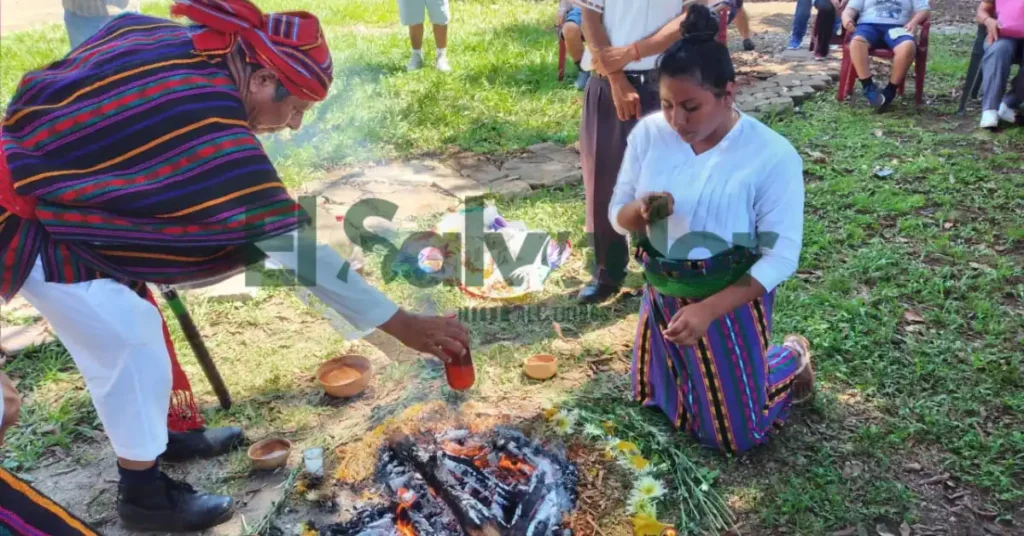
That same challenge affects many cultural traditions and festivals in El Salvador, where older generations often help pass customs and identity to younger people.
That is why indigenous language support has to start before school age. The program focuses on ages 3 to 5 because that is when children still learn by ear, by repetition, and by warm daily use.
How Náhuat Is Being Taught to Children Now
Náhuat classes for young children usually start with simple greetings, then short self-introductions. After that, teachers name everyday objects, animals, and plants, so children hear the language tied to things they can point to, touch, and see.
Teachers often repeat the same phrases during daily routines, like lining up, washing hands, or tidying toys. That steady pattern matters for ages 3 to 5, since early childhood is when children are still building sound, memory, and listening skills. UNESCO and early language learning research both support early exposure for better pronunciation, retention, and oral fluency, and that fits well with early childhood education settings where play and repetition come first.
Truth is, the best learning here feels gentle. Children sing, echo words, and repeat phrases naturally, just like people casually learn expressions from guides to 10 Salvadoran slang words through repetition and everyday use. And because the lessons stay oral at first, kids get confidence before they move toward reading and writing.
All Is Not Lost, Early Immersion Helps Keep Náhuat Going
The preschool room was loud in the best way. Small voices repeated Náhuat words, then broke into giggles when a teacher pointed to a picture and the children answered together.
I could hear chairs scrape, pencils tap, and one child practicing a word again and again. Then, a few years later, those same children move into Spanish-speaking schools, carrying Náhuat with them instead of leaving it behind.
That path matters because the program does not stop at nursery age. It also offers Saturday courses for grammar and writing, where older students work on spelling, sentence order, and reading with more care.
And some teenagers speak fluently already, which changes the feel of the whole effort. They are not starting from zero, they are helping hold the language up for younger kids, and that is a big difference.
The program sits on a careful mix of local support and outside backing. Reporting linked to Don Bosco University and municipal references show that schools and local officials have kept it alive, even when the road has been rough.
That roughness goes back to 1932, when the crackdown after the peasant uprising in El Salvador helped crush public Náhuat use. Academic histories such as those discussed by Encyclopaedia Britannica note how fear and repression pushed many families to stay silent, and that silence still shapes the shortage of speakers today.
So much was lost for so long. But the outlook is still real, just modest: keep the language stable, grow new speakers, and give children and teens enough contact that Náhuat stays in daily life instead of fading away.
Why Náhuat Revival Depends on Families, Not Schools Alone
Classroom lessons can introduce Náhuat, but home life is where it sticks. UNESCO lists intergenerational transmission as a key sign a language can survive, because children need to hear it in real daily life, not just on a worksheet. I remember a shopkeeper in a small town saying the words sounded “alive” only when grandparents used them at the table, where the air smelled like coffee and warm tortillas.
That’s the hard part for Spanish-dominant schooling. If a child leaves class and only hears Spanish at home, Náhuat can fade fast. Families have to use it in greetings, chores, stories, and jokes, much like the way everyday Salvadoran slang stays alive through casual daily conversation.
What It Takes to Revive an Endangered Language
Preserving a language means keeping it recorded, taught, and visible, even if only a few people still speak it. Stabilizing speaker numbers is the next win, because it slows the loss and keeps the language alive in daily circles, which UNESCO treats as a real success for small communities.
Full revival is harder. That means broad everyday use at home, in shops, and among children, so the language sounds normal again in public life. I remember hearing one shopkeeper switch into Náhuat so naturally it felt like the room got warmer, but that kind of use usually takes years, not weeks.
Truth is, preventing disappearance can still matter a lot, even when total revival is not realistic yet. The language scholar Lenore Grenoble and other revitalization researchers describe success in stages, not as one finish line, so keeping a small speaker group steady can be a meaningful near-term goal.
Language survives best through regular family interaction, much like the traditions described in these Salvadoran family Sundays centered around food, conversation, and shared routines.
Conclusion
Náhuat survival depends on the youngest speakers, family use at home, and steady support over time. Children also connect language to rhythm, songs, and storytelling, which is why Salvadoran music and dance remain closely tied to cultural preservation. A few lessons can help, but they are not enough on their own.
Still, the goal is clear, keep Náhuat alive and growing, not let it vanish. That future is possible if people keep speaking, teaching, and backing the language with care.
Community traditions survive through shared experiences, whether through language lessons at home or gatherings like the Juayúa Food Festival where culture is passed between generations.
Frequently Asked Questions
What language did the Pipil tribe speak in El Salvador?
The Pipil spoke Náhuat, also called Nawat, in El Salvador. It belongs to the Nahua language family and was once widely heard in daily life.
Is Nawat still spoken?
Yes, but by far fewer people than before. UNESCO classifies Náhuat as endangered, so every fluent speaker matters.
What is the Nawat language?
Nawat is the Salvadoran variety of the Nahua language family. People use it for stories, family memory, and cultural identity.
Are there still Pipil in El Salvador?
Yes, Pipil people still live in El Salvador today. Many keep their identity alive through family ties, traditions, and language work.
Are Pipil people Native American?
Yes, Pipil people are an Indigenous, Native American people. Their roots are tied to the historic Nahua-speaking communities of Central America.
What is the difference between Náhuat and Nahuatl?
Náhuat is the name often used in El Salvador, while Nahuatl is the better-known name used in Mexico. They are closely related, but they are not always the same variety.
Why is Náhuat endangered?
Náhuat became endangered because fewer families passed it down at home. Public pressure, stigma, and language shift also made people stop using it openly.
How is Náhuat being taught to children?
It is often taught in community classes, school programs, and local cultural projects. I’ve seen how much a child lights up when a teacher says a simple word and the room repeats it.
Why is family transmission important for Náhuat?
Family transmission keeps a language natural and everyday, not just classroom-based. Kids learn faster when they hear it at home during real moments, like meals and games.
What does language revitalization mean?
Language revitalization means helping a language speak again in daily life. UNESCO and language-revitalization research describe it as building use, learning, and pride across generations.
Can a language be revived if few people still speak it?
Yes, if people, families, and communities keep using it and teaching it. A language can grow again through steady effort, even when speakers are few.
Why did the Pipil stop speaking Náhuat publicly in 1932?
After the 1932 violence in El Salvador, many Pipil people hid their identity and language to stay safe. Fear and discrimination pushed Náhuat out of public life, even though some families kept it privately.