
Why Learn Those 10 Salvadoran Slang?
Salvadoran slang words and phrases help you sound less like a textbook and more like a real person. On a bus in El Salvador, I heard a taxi driver joke with a hotel clerk, and the room felt warmer the second they switched into local expressions. According to Instituto Cervantes, regional variation is a normal part of Spanish, so learning the local translation helps with travel and everyday Spanish.
It also helps you be prepared for the little mix-ups that happen fast. A phrase between friends can sound rude to a boss, or mean something totally different in Spain. If you’re unsure, standard Spanish is safer when unsure, and it gives you a base before you use the slang. If there’s a quiz on this page, try it before moving on, then compare what you know with the phrase list below.
When NOT to say them: skip these slang words in formal settings, with teachers, or with people you don’t know well.
Key Takeaways
- Salvadoran slang is useful, but only in the right setting.
- Context matters, because one word can sound friendly or rude.
- Local meaning can shift, so listen first and copy the tone.
- Some high-frequency words are easy to learn and hear often.
- Watch the region, since slang can change across places.
- Keep standard Spanish ready, so you have a safe fallback.
How Salvadoran slang changes by context and relationship
Salvadoran slang can sound warm with friends, but too informal around elders, a boss, or new coworkers.
Think of it like tone. With close friends, slang can show comfort and trust. But in a more serious context, people often expect respect and clearer standard Spanish. The Real Academia Española also notes that usage changes by region and situation, so the relationship matters as much as the words.
A quick rule helped me: if I’d hesitate before saying it to my boss or elders, I avoid the slang and switch to standard Spanish, or check a grammar guide like our voseo guide. For example, a joking nickname may work with friends, but sound too sharp with a shop clerk or hotel staff. When you’re unsure, plain Spanish is the safest choice.
Learning Video about Salvadoran Slang
Mónica, our virtual Spanish teacher, introduces Salvadoran slang in a short video about El Salvador. Listen for pronunciation and common expressions while you watch.
The 10 Most Important Salvadoran Slang Phrases
These 10 Salvadoran slang phrases are a quick way to sound less lost and more local. Each one comes with its meaning, an example use, and a quick note on how it usually lands. Got a favorite I missed? Drop it in the comments.
¿Qué onda(s)?
¿Qué onda(s)? es un saludo casual, algo como “hey” o “what’s up?” en inglés. Entre friends suena natural y relajado, y una respuesta común es Todo tranquilo! Yo lo escuché mucho en una tienda pequeña, con música baja y gente riéndose mientras esperaba mi café. I wish someone told me antes que, según Instituto Cervantes, los saludos cambian bastante según la región, así que el contexto importa mucho. Si quieres un mini ejemplo: “¿Qué onda(s)?”, “Todo tranquilo!”.
Cuidado: evita usarlo con un boss salvadoreño o en situaciones formales, porque puede sonar como too much slang. Si quieres ir a lo seguro, usa “Hola, ¿cómo está?” o “Buenos días”.
¡Chivo! Meaning and pronunciation
Chivo literally means goat, but in slang it can mean something cool or really appealing. I heard a taxi driver use it after seeing a bright mural, and the tone made it clear he meant, How cool! If something looks impressive, tasty, or just plain awesome, people may react with ¡chivo!
A natural example is: ¿Está chivo, va? That corrected phrase is the one to remember. It’s a common way to ask if something looks cool, and the little ¿Está… va? ending gives it a casual local feel.
Pronunciation note: say chee-boh, with a soft ch sound and a clear v that often sounds close to a b in Spanish. If you already know basic Spanish slang, this one tends to show up fast in everyday talk.
¡Púchica!
¡Púchica! is a softer kind of swearing, used when something goes wrong and you want to avoid harsh word choices. It’s common around children, so you might hear it after a small mess, not a big meltdown.
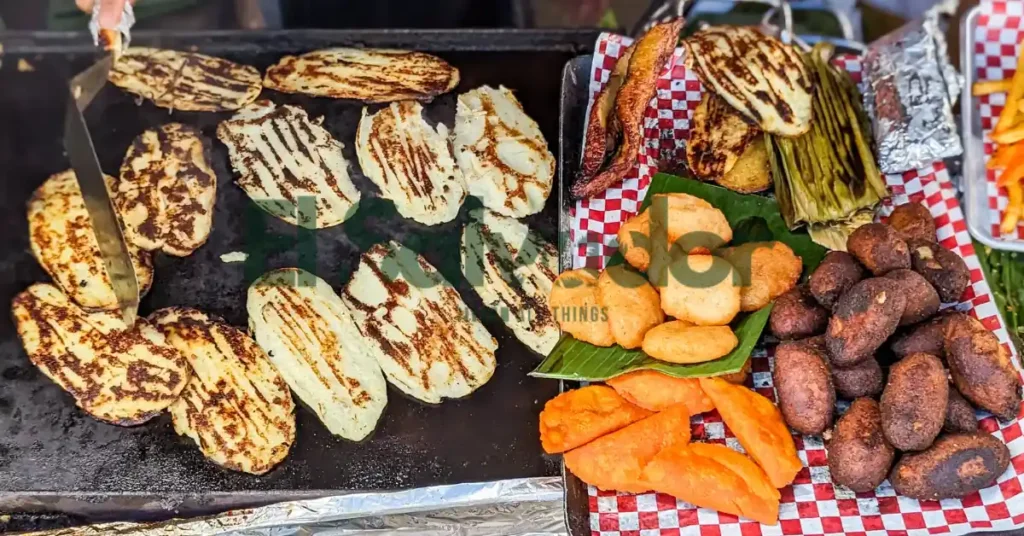
I once heard phrases like this shouted across busy food stalls at events similar to the Juayúa Food Festival, where loud crowds and casual slang blend naturally together. It has the same quick, surprised feel as Shoot!, just with less bite.
¡Cabal!
¡Cabal! means Exactly! or Correct, and it works like a quick You’re right in everyday talk. People also group ¡Cabal!, A huevo, and Simón together as agreement words, so it’s useful when you’re confirming you’re on the same page. Here’s a simple example: “Mañana nos vemos temprano.” “¡Cabal!” If you want more slang basics, a pronunciation note can help too.
¡No tengo pisto!
Pisto is one of so many words for money in Spanish slang. So ¡No tengo pisto! means “I have no money!” Expressions like these often show up during gatherings similar to traditional Salvadoran family Sundays, where conversation, jokes, and shared meals all blend together. I heard it once at a small café, right when the check landed and the table went quiet.
¡Es de choto!
¡Es de choto! significa que algo es for free, o sea, sin pagar pisto. Si oyes a alguien preguntar ¿Es de choto?, casi siempre quiere saber si la entrada, la comida o hasta el transporte salen gratis.
Una pregunta práctica sería: ¿La entrada al carnaval es de choto o hay que pagar? Esa frase funciona en mercados, fiestas y buses, sobre todo cuando quieres evitar un gasto sorpresa.
Como nota cultural, en San Miguel se recuerda un gran carnival hecho for free durante la época del mayor Will Salgado. La gente lo menciona porque mezcla fiesta, calle y la idea bien clara de que algo no cuesta nada.
¡Vaya pues!
¡Vaya pues! is a casual Salvadoran slang phrase people use to agree, like saying Ok! or “sure.” I heard it after a gym chat when someone asked if we were coming back tomorrow. “¡Vaya pues!, nos vemos a las seis.” It sounds relaxed and friendly, and that’s the whole point.
Here’s another quick one: “¿Nos vamos?” “¡Vaya pues!” It’s a simple way to agree, but it stays casual.
¡Que le vaya bien!
¡Que le vaya bien! is a friendly way to say goodbye or take care. In El Salvador, people use it when parting with warmth and respect, and it does not feel too formal or too slangy. It fits those moments when you’re leaving a shop, ending a chat, or waving off a neighbor, and you want to wish someone well as they go.
¡Te pelaste!
Te pelaste has two meanings, and tone decides it. In a friendly voice, it can mean admiration, like you’re crazy in a good way, almost like saying a pro surfer nailed a wild wave. But if someone sounds annoyed, it can mean you messed it up, or even that you sounded stupid.
For the clearest clue, listen to the mood around it. A warm smile usually points to praise, while a frustrated face or sharp voice usually signals criticism.
Me llamo Teresa, ¿y vos?
While vos is part of modern everyday speech, El Salvador also carries deeper linguistic roots connected to the Náhuat language and Indigenous heritage. No es solo slang, también forma parte del voseo, una forma de hablar muy viva y normal en la región. Según BBC Mundo, el voseo está muy extendido en América Latina, y por eso vas a oírlo en la calle, en tiendas o en charlas entre amigos.
En El Salvador es muy común, y a veces vos aparece al final de la frase para sonar cercano. Yo lo escuché una vez en una cafetería, entre el ruido de tazas y una radio bajita: ¿No sé, vos? Sonaba natural, no raro.
Mini diálogo:
A: Me llamo Teresa, ¿y vos?
B: Me llamo Diego.
Si estás en un entorno formal, usted suele ser más seguro. Y si quieres comparar tú y vos, mira también la sección de contexto y relación y, si la tienes a mano, el artículo sobre voseo.
Common Salvadoran slang words travelers often misunderstand
Literal meaning can be tricky with common slang, because the words don’t always match the feeling behind them. I heard a taxi driver say “¿Qué onda(s)?” and thought he meant waves. It usually just means “what’s up?”
- ¿Qué onda(s)? Sounds like “what waves?”, but it’s a casual greeting. A shop clerk might say it like, “¿Qué onda(s), amigo?”
- ¡Chivo! The literal meaning can be “goat,” yet people often use it to mean “cool” or “nice.”
- ¡Púchica! This is an exclamation, not a direct insult. You may hear expressions like this during crowded street celebrations and festivals in El Salvador, where slang becomes part of the atmosphere.
- ¡Te pelaste! Travelers sometimes misunderstand this one too. In context, it can sound like “you messed up” or “you blew it.”
That’s why translation fails here, the literal meaning misses the tone, speed, and situation. For learners and travelers, the safest move is to listen for context first, then match the feeling, not just the words. The atmosphere gets loud, energetic, and rhythmic in the same way Salvadoran music and dance shape local celebrations and social gatherings.
Salvadoran slang outside El Salvador: which phrases travel and which do not
Some Salvadoran slang travels well across Latin America, but a lot of it stays rooted in El Salvador. A taxi driver in Guatemala smiled politely at a phrase I thought was obvious, then asked me to repeat it slower.
According to the Real Academia Española, meaning and use can change by region, so a word that sounds friendly at home can land as odd, blunt, or just plain confusing elsewhere. That’s why a line that feels warm in San Salvador may need extra care in Spain or another Spanish-speaking country.
From what I heard in shops and hotel lobbies, the phrases that travel best are usually the plain ones, the ones people can infer from context. The deeply local ones tend to carry more regional differences, and pronunciation or tone can shift the meaning fast. So if you’re crossing borders, it helps to remember that being understood is not the same as sounding natural.
Frequently Asked Questions
What are some Salvadoran slangs?
Common Salvadoran slang includes vaya pues, pisto, bicho, cabal, and púchica. I heard these tossed around at a market stall, in taxis, and even at a tiny cafe where the coffee smelled smoky and sweet.
What does Vaya Pues mean in El Salvador?
Vaya pues usually means okay, fine, or let’s do that. It can sound friendly, firm, or a little annoyed, depending on tone, like the way a shop owner said it after a long line.
What does no Tengo Pisto mean?
It means I don’t have money. In Salvadoran Spanish, pisto is a very common slang word for cash, and you’ll hear it in everyday talk.
What does bicho mean in salvadoran?
In El Salvador, bicho often means kid, boy, or young person. It can be casual and affectionate, but context matters, so check the phrase around it.
Can I use Salvadoran slang with my boss?
Sometimes, but only if the relationship is relaxed and you already know their style.
Which Salvadoran slang phrases are safe for beginners?
Start with mild, common phrases like ¿Qué onda(s)?, cabal, and vaya pues. These show up a lot in everyday conversation and are usually easier to use without sounding strange.
Are Salvadoran slang words used the same way in Spain?
Usually not. Spain has its own slang, and words can shift meaning across countries, which the Instituto Cervantes and Real Academia Española both note in their language references.
How do I know if a phrase is slang or standard Salvadoran speech?
If you hear it in casual chats, markets, or among friends, it may be slang. If it sounds like something you’d read in a formal notice or school book, it’s more likely standard speech.
What does ‘¿Qué onda(s)?’ mean in El Salvador?
It means what’s up? or how’s it going? People use it as a casual greeting, and it feels warm and easy in everyday talk.
Is ‘Púchica’ rude or polite?
Púchica is usually a mild exclamation, closer to gosh or darn. It’s generally polite enough for everyday use, and it often replaces stronger words when someone is surprised.
What does ‘Cabal’ mean in Salvadoran Spanish?
Cabal means exactly, right on, or that’s correct. You’ll hear it when someone agrees with you or says something fits perfectly.
What does ‘Te pelaste’ mean in Salvadoran slang?
It can mean you messed up, overdid it, or really went too far, depending on the situation. Because it can swing between teasing and criticism, tone is everything.
What does ‘¿Es de choto?’ mean?
It usually asks if something is free, easy, or maybe even fake, depending on context. Since choto can shift meaning, it’s smart to hear the full sentence before using it.
What does ‘Que le vaya bien’ mean?
It means have a good day or may it go well for you. It’s a polite, respectful farewell, and I heard it a lot from hotel staff and clerks.
What is voseo in El Salvador?
Voseo is the use of vos instead of tú for informal address. The BBC Mundo and language guides from the Real Academia Española explain that it’s common in parts of Central America, including El Salvador.
Why do some Salvadoran slang words have more than one meaning?
Slang changes by age, place, and tone, so one word can carry several meanings. That’s why a phrase that sounds playful in one group can sound sharp in another.
How can I avoid misunderstanding Salvadoran slang while traveling?
Listen first, ask when you’re unsure, and copy the tone of people around you. I once learned this the hard way after a taxi driver laughed kindly and repeated the phrase slower so I could catch it.
Which Salvadoran slang expressions are most common in everyday conversation?
You’ll hear ¿Qué onda(s)?, cabal, vaya pues, pisto, and púchica all the time. These are the ones that seemed to float through bus rides, corner shops, and family chats.
Should I translate Salvadoran slang word for word?
Usually not, because the literal meaning can miss the real feeling. A direct translation often sounds odd, so it’s better to match the phrase to the situation.
What is the safest alternative if I am not sure which slang to use?
Use simple standard Spanish, like gracias, ¿cómo está?, or que le vaya bien. If you’re unsure, keep it polite and skip the slang until you know the person better.