
How to Order Pupusas Like a Local
The first time I stepped into a pupusería, the smell of toasted corn masa, melted cheese, and hot griddle oil hit before anyone said a word. The menu felt fast and a little loud, but ordering is usually simple once you catch the rhythm.
- Greet politely. A quick “buenas” or “buenas tardes” goes a long way.
- Ask what’s available. I heard locals ask, “¿Qué tiene?” before choosing.
- Place the order. Say how many pupusas you want and what filling you’d like.
- Add curtido, salsa, and drinks. These often come with the order, but it helps to check.
- Ask for the bill. A simple “la cuenta, por favor” usually does it.
Simple, polite Spanish and a few gestures are usually enough. A nod, a smile, and pointing at the menu can work just fine, even if your words are tiny.
Key Takeaways
- Start with a friendly hola and greet the server first.
- Ask, ¿Qué pupusas tienen? and hear the fillings list.
- Pick one, usually queso, frijol, or chicharrón.
- Ask for curtido and salsa, or order a drink.
- Take your time, the smell of griddled corn hits fast.
- Say gracias when they bring the food and check on you.
- When you’re done, ask for la cuenta.
Step 1: Greet the server
A polite greeting sets the tone right away, and it makes the whole exchange feel easier. I remember the coffee smell, the clink of plates, and how a simple hello got me a warmer smile from the server. That tiny first step mattered before we ordered at the pupusería.
- Buenos días for the morning.
- Buenas tardes for the afternoon.
- Buenas noches for the evening.
Pick the greeting based on the time of day. Then follow with: ¿Me podría traer el menú, por favor? I wish someone had told me that this one polite line makes the rest feel much smoother. For standard Spanish wording, Real Academia Española is a solid reference.
Step 2: Ask What Kinds of Pupusas They Have
If the menu is unclear, just ask. The chalkboard menu was half-smudged, so we ended up pointing at pictures and nodding at the counter. A simple question usually gets you the answer fast, plus a little smile from the person making them.
- ¿Cuáles pupusas tienen?
- ¿Qué sabores de pupusas ofrecen?
Common Pupusa Fillings usually include a few basics that show up again and again.
- Queso, cheese
- Frijoles, beans
- Chicharrón, seasoned pork
- Revuelta, mixed filling
- Loroco, edible flower, often mixed with cheese
Here’s the thing, revuelta means mixed filling, so you may get a little of everything. Loroco has a green, floral smell, and it often tastes best with cheese. If the menu still feels messy, point to it or ask what they recommend today.
Step 3: Place Your Order
The counter usually smells like hot masa and melted cheese, and this is the moment to speak up. The order lines are simple, so you can keep it short and still sound natural.
- Quisiera, one polite way to say, “I’d like…”
- Me trae, por favor, a very common way to say, “Bring me, please.”
Examples: Quisiera dos de queso y una de frijoles = I’d like two cheese pupusas and one bean pupusa. Me trae tres revueltas, por favor = Bring me three mixed pupusas, please.
You can swap the filling and change the number, but keep the same sentence pattern. If you’re still deciding, check best filling choices first, then use the same phrase with your pick. For simple verb and phrase support, SpanishDict can help too.
Step 4: Add Sides and Drinks
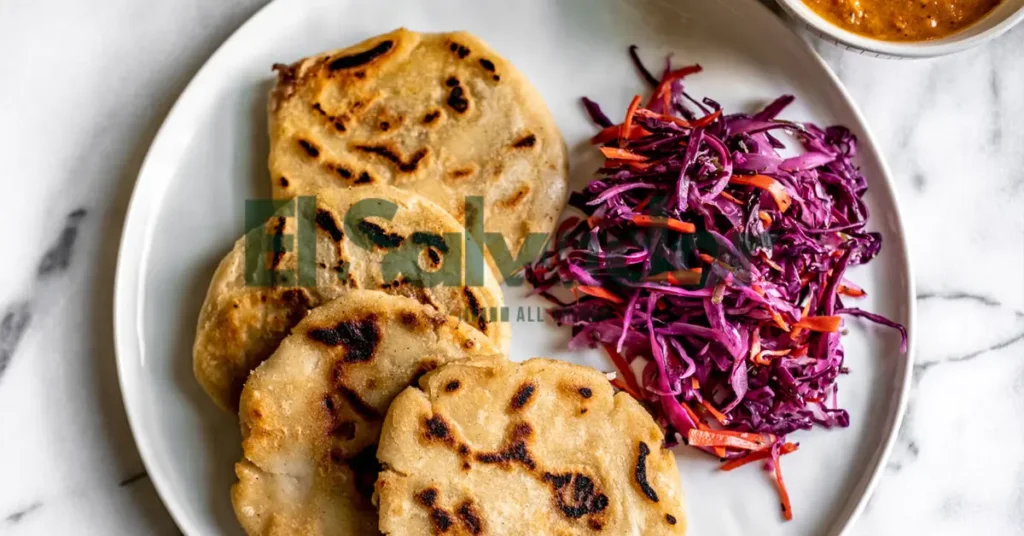
Pupusas are often served with curtido and salsa roja, and those little sides change the whole plate. Traditional El Salvador food often relies on simple side dishes like curtido and salsa roja to complete the meal experience. Curtido is a pickled cabbage slaw, and salsa roja is the red tomato sauce that usually comes on the side. The crunchy, tangy bite helps after that warm corn smell hits the table.
- “Can I get extra curtido?” if you want more crunch and tang.
- “Can I get more salsa roja?” if you like a saucier plate.
For drinks, you can ask after the main order. A simple one is, “Can I get an horchata?” If you want the full ordering flow, it helps to keep it simple and ask for sides, then drinks, in that order.
Drinks are usually ordered separately after the main order is placed.
Step 5: Thank the Server
After you order, a quick thank-you feels natural and polite. In a small café, I heard locals say it with a smile while the coffee still smelled warm and sweet.
- Gracias – Thanks
- Muchas gracias – Thank you very much
Step 6: Ask for the bill
When the plates are empty and the server stops by less often, that’s usually the cue. I remember the room getting quieter, with clinking glasses and the smell of coffee still hanging in the air.
- ¿Me trae la cuenta, por favor? Can you bring me the bill, please?
- ¿Cuánto es? How much is it?
La cuenta means the bill, so it’s the word to remember here. If you want a quick refresher on the whole restaurant flow, check the restaurant flow recap.
A simple question like this feels much easier than guessing at the table. You’ve got this, and the last step is usually the easiest one.
Best Pupusa Fillings to Try First
Most pupusa places keep the first choices pretty simple, and that helps. I remember a local shop where the griddle hissed, the curtido smelled sharp, and the cook kept pointing at the fillings like he’d done this a thousand times.
- Queso is the mildest pick, soft and simple. If you want to recreate the same mild flavor at home, this traditional pupusas recipe starts with classic cheese and bean fillings.
- Frijoles has a warm, earthy bean flavor.
- Chicharrón is richer, with a savory pork taste.
- Revuelta is a mixed filling, usually cheese, beans, and pork, and it’s a common local favorite. Revuelta remains one of the most popular fillings people order when searching for the best pupusas in El Salvador, especially at traditional pupuserías.
- Loroco brings a more regional flavor, with a green, floral note.
Best for first-timers: I’d start with queso for something mild and easy, or revuelta if you want the classic mixed option locals order a lot.
It also helps to ask what pupusas they have before you order, since the menu can shift from one stand to the next. For a bit more context on pupusa varieties and regional roots, Britannica gives a simple overview.
Useful Spanish Phrases for a Restaurant Stop
My first meal in Spain, where the clink of glasses and smell of garlic hit before the menu even opened. Keep these quick phrases handy for the moments that matter most.
Greeting
- Hola, buenas. Hello, hi.
- Una mesa para dos, por favor. A table for two, please.
- ¿Podemos sentarnos aquí? Can we sit here?
Asking what they have
- ¿Qué tienen? What do you have?
- ¿Cuál es el plato del día? What’s the dish of the day?
- ¿Qué recomienda? What do you recommend?
Ordering
- Quiero… I want…
- Para mí, … For me, …
- Yo voy a pedir… I’m going to order…
Adding sides or drinks
- Con patatas, por favor. With fries, please.
- Una cerveza / agua / vino, por favor. A beer / water / wine, please.
- ¿Nos trae pan también? Can you bring bread too?
Thanking
- Gracias. Thank you.
- Está muy bueno. It’s very good.
- Muchas gracias por todo. Thank you very much for everything.
Asking for the bill
- La cuenta, por favor. The bill, please.
- ¿Nos trae la cuenta? Can you bring the bill?
- ¿Se puede pagar aquí? Can we pay here?
We almost didn’t ask for the bill once, and the table next to us saved us with a grin and a nod. If you want a fuller phrase review, SpanishDict guide is handy for quick restaurant practice, plus it pairs well with Step 1 and Step 6.
First-Time Ordering Tips for a Pupusería
At the counter, the best move is simple, greet first, keep requests short, and stay polite. A quick buenas and a smile help, especially in busy pupuserías where simple Spanish and a few gestures are totally fine.
- Greet first. A quick “buenas” or “hola” feels warm and respectful.
- Keep it short. Short, polite requests are easier for everyone.
- Ask what’s available today. Popular street-food spots and many of the cheap eats in El Salvador often sell out of their best fillings early in the day.
- Point to the menu. That kind of casual ordering style is common in busy places like Mercado Central San Salvador, where food stalls move quickly and menus change often.
- Ask for recommendations. At many traditional San Salvador restaurants, asking staff for recommendations is still one of the best ways to find the freshest local dishes.
- Use simple Spanish and gestures. A nod, a point, or one clear word works fine.
One afternoon, a cashier heard my messy Spanish, smiled, and just pointed to the day’s fillings. That tiny help made the whole order easier, and it ties in nicely with How to Order Pupusas Like a Local. First-time visitors with sensitive stomachs should also check this guide on Salvadoran food to avoid before ordering heavily fried or unfamiliar market dishes.
Quick Phrase Cheat Sheet by Occasion
| Situation | Quick phrases |
|---|---|
| Before ordering | ¿Tiene menú en español? | ¿Qué me recomienda? | Useful Spanish phrases |
| While ordering | Quisiera… | Para mí… | Yo quiero… | ¿Me trae…? |
| Adding extras | Con queso, por favor. | Sin cebolla. | Más salsa, por favor. | ¿Puede traer…? |
| Thanking | Gracias. | Muchas gracias. | Muy amable. | Todo estuvo muy rico. |
| Paying | La cuenta, por favor. | ¿Puedo pagar aquí? | ¿Aceptan tarjeta? | Quédese con el cambio. |
Conclusion
Start with a friendly hola, ask for a table or the menu, then place your order once the smells from the kitchen start drifting over. I remember a waiter in a small café smiling when I asked for la cuenta at the end, after adding fries and a drink without any fuss.
That simple flow, greet, ask, order, add sides or drinks, thank, and ask for the bill, tends to work in most places. If you get stuck, simple polite Spanish is usually enough, and that confidence goes a long way.
Frequently Asked Questions
What is the most popular pupusa flavor?
Cheese and cheese with beans are usually the crowd favorites. In many places, those are the first fillings people try, and they pair well with curtido and salsa.
What is the correct way to eat pupusas?
There isn’t one perfect rule, but most people eat them warm, with curtido and tomato salsa on the side. A fork works fine, and so does using your hands if the pupusa isn’t too hot.
How unhealthy are pupusas?
It depends on the filling, size, and what you eat with them. Pupusas can be filling and satisfying, but they may be higher in calories, fat, or sodium if they’re large or loaded with cheese and meat. The CDC and NIDDK both note that balanced portions matter for overall health and blood sugar control.
Are pupusas good for diabetics?
They can fit into a diabetes-friendly meal for some people, but portion size and fillings matter a lot. Whole meals with more fiber, less added fat, and careful carb balance are usually easier to manage.
What is the #1 worst food for your blood sugar?
There isn’t one single worst food for everyone, but sugary drinks are often a big problem because they raise blood sugar fast. Sweet drinks, candy, and refined carbs can all cause spikes, especially in large portions. The CDC and NIDDK suggest focusing on overall eating patterns, not just one food.
What are the healthiest pupusas?
Pupusas with beans, cheese, or loroco tend to be lighter choices than versions packed with lots of fatty meat. Adding curtido and keeping portions moderate can make the meal feel more balanced. I remember one street stall where the smell of toasted corn masa was amazing, but the vendor still said the simplest fillings were the ones locals ordered most.