
Yuca con Chicharrón
Yuca con chicharrón is a classic Central American dish that feels bold and comforting at the same time. You get tender yuca, crispy chicharrón, bright chimol, and a cool cabbage salad on one plate.
I still remember the first time I saw it served at a small local spot, with the pork crackling and the cabbage salad smelling fresh beside it.
Key Takeaways
- The dish is a layered, savory mix with rice, beans, and meat.
- Main add-ins usually include avocado, fried egg, plantains, and fresh toppings.
- Cook the base parts first, then fry or warm the toppings.
- Keep the chicharrón crisp, because soft pork loses the best bite.
- Chop and prep everything before you start plating.
- Serve each component separately, then build the bowl right before eating.
What Is Yuca con Chicharrón?
El Salvador food includes hearty comfort dishes like yuca con chicharrón, made with cassava, crisp pork, and fresh cabbage toppings. Yuca, also called cassava, is a major staple crop in many tropical regions, so it shows up in all kinds of comforting meals. I remember the first time I smelled it at a small roadside stop, it was rich, salty, and a little earthy all at once.
The magic is in the mix of textures. The yuca turns soft and starchy, the chicharrón brings crunch and deep pork flavor, and the cabbage adds a fresh bite that keeps each forkful from feeling too heavy. The full step-by-step method is in the recipe card, and if you’ve ever heard the crackle of chicharrón fresh from the pan, you already know why people love it.
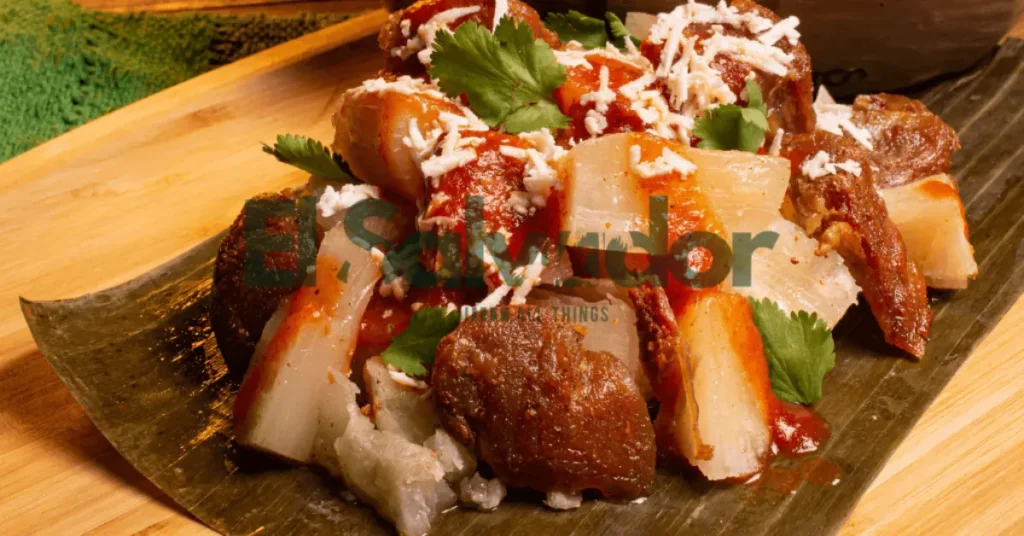
Like the best pupusas in El Salvador, yuca con chicharrón is often served as a filling comfort meal shared across family tables and local markets.
What Is Chicharrón?
Chicharrón usually means fried pork skin or crisp pork belly-style pieces, cooked until they turn golden, crunchy, and salty. Depending on the cut and the kitchen, you might get thin, crackly skin or richer pieces with a bit more fat. If you want the full method, the part where the pork rind is fried and drained is the key moment.
The word changes from place to place, too. In some regions, chicharrón points to pork cracklings; in others, it can mean different fried meat bits or even a broader snack. That same busy food atmosphere is easy to experience inside Mercado Central San Salvador, where traditional Salvadoran dishes vary from stall to stall.
What Is Chimol?
Chimol is a fresh Salvadoran salsa made from chopped tomatoes, onion, pepper, cilantro, and lime. We usually see it served as a topping or a side sauce, bright and crisp beside grilled meat, tortillas, or rice.
It’s similar to pico de gallo, but it often feels simpler and lighter.
What Is Yuca?
Yuca, also called cassava, is a starchy root that shows up in so many kitchens for good reason. It grows well in dry places and is a common staple in many parts of the world, which is why the root shows up so often beside grilled meats and bright sauces.
Cooked yuca tastes mild, a little nutty, and softly earthy. The texture is tender but still dense, almost like a mix between potato and chestnut, and that makes it perfect for soaking up salsa, garlicky oil, or a tangy dip.
- Pick firm roots: Soft spots or wrinkled skin usually mean the yuca is past its best.
- Peel it well: The thick skin and pinkish layer underneath need to come off before cooking.
- Check the center: A fresh root should look white, not stringy or dark.
How to Make Yuca with Chicharrón
Start with the yuca, because it needs the longest time and sets the base for the whole plate. Boil it until it turns tender and the pieces split easily at the edges, then drain well so it stays fluffy, not soggy. I wish someone told me that waiting on the yuca first keeps everything else crisp and bright later.
While the yuca cooks, make the chimol, since the tomatoes, onion, and lime taste best when they sit for a few minutes. Next, prep the cabbage so it stays cold and crunchy, which gives the plate that fresh bite against the soft yuca. Then fry the chicharrón last, because it tastes best hot, crackly, and fresh from the pan.
Here’s the timing map that keeps it moving: yuca first, chimol while it cooks, cabbage next, chicharrón last. Plate the yuca, pile on the cabbage, spoon over the chimol, and finish with the chicharrón right before serving so the crackle doesn’t fade.
Many traditional San Salvador restaurants serve yuca con chicharrón alongside soups, tamales, and grilled meats as part of larger local meals.
How to Choose the Best Yuca for This Recipe
- Pick roots that feel heavy and firm for their size. That usually means they still hold enough moisture to boil up tender.
- Avoid yuca with soft spots, cracks, or mushy patches. Those pieces can cook unevenly and turn stringy.
- Look at the ends. Fresh yuca should have clean, not dried-out ends, with no shriveled look.
- If you can, choose roots that look smooth and feel solid all over. I wish someone told me that before I bought a tired, woody one that smelled faintly musty at the shop.
- For the best texture, pair your choice with the ingredients list and the part of the recipe instructions where the yuca is peeled and boiled.
- Frozen or peeled yuca can be a handy backup if fresh cassava isn’t available. It saves time and still works well for boiling.
Yuca Safety and Doneness: What to Watch For
Peel yuca thoroughly before cooking, and cut out the woody core if you spot it. FDA-style root vegetable safety habits matter here, because the tough skin and stringy center can stay unpleasant if you rush the prep.
- Boil yuca until a fork slides in easily, then check a piece in the middle.
- The center should no longer feel fibrous or chewy, but the pieces should still hold their shape.
- If the yuca is soft on the edges but stringy inside, let it cook a little longer.
- Drain it as soon as it’s tender, which helps keep the texture firm for the next step in the recipe instructions.
I wish someone had told me that yuca can look done before it really is. The first time I cooked it, I heard that soft thud in the pot and almost stopped too soon, but the middle still had that stubborn, fibrous bite.
How to Tell When Yuca Is Fully Cooked
- The edges look tender and a little split, not sharp or chalky.
- A fork slides in easily, with very little resistance.
- There’s no hard center when you press the thickest piece.
- The pieces stay intact when you lift them, instead of falling apart.
- It should feel soft inside, but still hold its shape on the spoon.
- Watch it closely near the end, because overboiled yuca turns mushy fast.
Ingredients for Yuca con Chicharrón
Gather the main yuca con chicharrón ingredients first, then split out the chimol and cabbage salad. That made it easier for me at the market, where the yuca smelled earthy and the pork crackled in the pan nearby.
Main ingredients
- Yuca, peeled and cut into chunks
- Pork chicharrón, cooked and crisp
- Salt
- Water for boiling
Chimol ingredients
- Tomatoes, diced
- White onion, finely chopped
- Green pepper, finely chopped
- Fresh cilantro, chopped
- Lime juice
- Salt
Cabbage salad ingredients
- Green cabbage, thinly shredded
- Carrot, grated
- Vinegar or lime juice
- Salt
Main Ingredients
- Cassava, also called yuca. Fresh yuca gives the best texture, but frozen works well too.
- Chicharrón, for that crispy, salty bite.
- Salt, to season the yuca and the pork.
- Black pepper, for a little heat and depth.
- Vegetable oil, for frying and getting everything golden.
For the Chimol Sauce
- Tomatoes, chopped small
- Onion, finely diced
- Bell pepper, finely diced
- Cilantro, chopped fresh
- Lime juice
- Salt
- Black pepper
For the Cabbage Salad
- Cabbage
- Carrot
- Onion
- Hot pepper
- Oregano
- Limes
- Salt
Step-by-Step Directions
- Boil the yuca until it’s tender, then drain it well.
- Fry the chicharrón until it’s crisp and golden, and let the crackling sound calm down.
- Mix the chimol with tomato, onion, lime, and salt. It should smell bright and fresh.
- Toss the cabbage salad until it’s lightly dressed and still crunchy.
- Assemble everything just before serving, so the yuca stays warm and the toppings stay crisp.
If you want to get ahead, check the make-ahead section before you start. I wish someone told me that sooner, because the last-minute rush is real once the hot yuca hits the plate and the chicharrón starts calling everyone into the kitchen.
Prepare and Boil the Yuca
- Peel the yuca first. The thick skin comes off in layers, and the white flesh should look clean.
- Cut the yuca into sticks or chunks. Try to keep the pieces close in size so they cook evenly.
- Rinse the pieces, then drop them into a pot of water. If you like, add a little salt to the water.
- Bring it to a boil, then lower the heat and cook until the yuca is tender. A fork should slide in easily, but the pieces should still hold their shape.
- Drain the yuca well right away. I wish someone told me not to leave it sitting in water, because it can turn soggy fast.
Keep an eye on it near the end. Yuca goes from firm to too soft quickly, and you want it tender, not falling apart.
Fry the Chicharrón Until Crisp
- Fry the chicharrón until it’s deeply crisp, not just golden. The real goal is crunch, and you should hear that sharp crackle in the pan.
- Drain it well on a rack or paper towels right away, so it doesn’t sit in its own steam and turn soft.
- Don’t rush this part. I wish someone told me that a pale, lightly colored piece can still be underdone if it bends instead of snapping.
Make the Chimol
- Chop the tomatoes, onion, bell pepper, and cilantro into small pieces. Keep them about the same size so each bite feels even.
- Mix the vegetables in a bowl until they look bright and well blended. I wish someone told me how good it smells right here, sharp and fresh.
- Squeeze in lime juice, then add salt and pepper. Stir again so the juice coats every piece.
- Taste it before serving, then add more lime, salt, or pepper if needed.
Prepare the Cabbage Salad
Shred the cabbage thin so it stays crisp and bites clean. I wish someone told me this the first time, because thick pieces can feel heavy fast.
If you want a softer crunch, blanch the cabbage for just a few seconds, then drain it well and cool it completely. That quick dip helps, but only if you really dry it after, or the salad turns watery.
Toss the cabbage with a light dressing of lime and oregano, then stop as soon as it looks evenly coated. You want it glossy, not soggy, so use just enough to wake it up.
Assemble and Serve
Layer the hot, tender yuca first, then add the crisp pork so the juices hit the root while it’s still warm. Spoon on the fresh chimol and bright cabbage right before serving, because the sauces stay lively and the pork keeps its crunch.
That final plate should look simple and generous, with tender yuca, crisp pork, fresh chimol, and bright cabbage all piled together.
Best Way to Serve Yuca con Chicharrón
Yuca con chicharrón usually shows up as a hearty lunch, and it loves a warm side on the table. I still remember a street lunch where the fried pork crackled in the bowl, and the cook laughed when I asked for extra lime. I wish someone told me how well it fits with a simple soup first, like sopa de mondongo or a light broth on a cool day.
- Tamales: Soft homemade Salvadoran tamales also pair naturally with yuca con chicharrón during larger family-style meals.
- Roasted meats: Serve it with chicken, pork, or beef if you want a bigger feast.
- Fresh salsas: A tomato salsa or curtido adds brightness and cuts the richness.
- Drinks: Try horchata, tamarind juice, fresh lemonade, or a cold beer with lunch.
Meals like this are often served alongside traditional staples similar to this homemade pupusas recipe, especially during family lunches. If you like more serving ideas, the serving ideas section has a few easy matches for family-style meals. And yes, a squeeze of lime on the side still makes the whole plate smell even better.
Traditional Salvadoran meals often include dishes similar to these homemade panes Salvadorenos, especially during gatherings and holiday weekends.
What to Serve with Yuca con Chicharrón
- Curtido, for a sharp, crunchy bite that cuts the rich pork.
- Tomato salsa or a mild chile sauce, if you want a little heat on the side.
- Refried beans with warm tortillas, which makes the meal feel extra Salvadoran.
- Chicken soup or a light vegetable soup, when you want a starter that won’t feel too heavy.
- Horchata de morro, tamarind juice, or a cold fresco de frutas to balance the salty, crispy chicharrón.
Can You Make Yuca con Chicharrón Ahead?
Yes, some parts can be made ahead, and that saves a lot of stress. I wish someone told me that the chimol can sit in the fridge a few hours, and the cabbage can be sliced and rinsed early, then kept cold until serving.
The chicharrón is best fried close to the table, because it loses that crackly bite fast. For the yuca, cook it until just tender, then drain it well and reheat gently so it stays soft, not soggy.
How to Store and Reheat Yuca con Chicharrón
- Yuca: Cool it fast, then refrigerate in a sealed container. I wish someone told me not to leave it sitting out, because it turns dull and sticky.
- Chicharrón: Store it separately on a plate or in a shallow container, lined with paper towel if you have it. Keep it uncovered only until it cools, then chill it covered so it stays safe.
- Chimol: Refrigerate it in its own container. Chimol and cabbage should stay separate, or the salad gets watery and soggy.
- Cabbage salad: Keep the cabbage mix cold in a separate container, and don’t dress it too early. The crunch is best when it stays dry.
For the best timing, cook leftovers quickly and refrigerate them promptly, since USDA food storage guidance says cooked leftovers should not sit out long. I’ve heard that same warning from a hotel cook and a market vendor, and both were right.
Reheat chicharrón for crispness: Use a hot oven or air fryer until it sizzles again. A dry pan works too, but keep it moving so it does not burn.
Reheat yuca gently: Warm it covered with a splash of water in the microwave, or steam it until soft. You want it tender, not dry or gummy.
Troubleshooting Yuca con Chicharrón
- Why is my yuca hard? It usually means it needed more time. The quick fix is to simmer it a few more minutes until a fork slides in easily. For prevention, check the doneness section and cut the pieces into even chunks so they cook at the same pace.
- Why did my yuca turn mushy? It likely cooked too long or boiled too hard. The quick fix is to drain it right away and keep it off the heat so it stops breaking apart. For prevention, cook at a gentle simmer and watch it closely near the end.
- Why is the chicharrón chewy? It needs more crisping, not more sauce. The quick fix is to return it to hot oil or a hot oven for a few minutes until it crackles again. For prevention, pat it dry before frying and don’t crowd the pan.
- Why is my chimol watery? The tomatoes and onion may have released too much juice. The quick fix is to drain off the extra liquid and add a little more chopped tomato, onion, and salt. For prevention, seed the tomatoes first and mix the chimol close to serving time.
- Why is the cabbage salad bland or soggy? It often needs more salt, lime, or a sharper bite. The quick fix is to toss in a little extra seasoning and serve it right away. For prevention, salt the cabbage lightly, then let it sit and drain before mixing, and keep it chilled in the storage section until needed.
First-time visitors unfamiliar with cassava, pork-heavy meals, or market food should also read this guide on Salvadoran food to avoid before ordering widely.
Possible Substitutions and Regional Twists
Regional versions can change the toppings, and the pork component sometimes shifts too. I’ve seen cooks swap in a different cut of pork, or even use a slightly different sauce, but the dish still smells rich and looks familiar from the first bite.
It worked when a small shop near the market was out of one ingredient. If you need ingredient help, keep the changes small so the flavors stay true.
- Pork: Use pork shoulder if another cut is hard to find. It stays close in taste and texture.
- Toppings: If a regional topping is missing, stick with the basic garnishes from the recipe. Too many extras can change the dish fast.
- Sauce: If the original sauce is tricky to source, a mild, tomato-based swap usually keeps the same feel.
What Success Looks Like
- Yuca should look tender but still hold its shape. The pieces should split easily with a fork, not fall apart into mush, and they should have a soft, pale center with clean edges.
- Chicharrón should be crisp and deeply golden. You want a loud crackle when you bite it, with a surface that looks blistered and dry, not greasy or limp.
- Chimol should look fresh and bright, with small, neat pieces of tomato, onion, and pepper. It should glisten lightly, but not pool with liquid, and it should taste sharp and clean.
- Cabbage should be lightly dressed, not soggy. The shreds should look glossy and crisp, with enough dressing to soften the bite a little while still keeping that fresh crunch.
Conclusion
Yuca con chicharrón works because it keeps things simple. Soft yuca, crispy pork, and fresh toppings give you that strong texture contrast in every bite.
The flavors stay bright when the cabbage, salsa, and lime are added at the end. I wish someone told me earlier how much that last fresh layer matters.
So if you can, serve it right away while the chicharrón is still crackling and the yuca is warm. That’s when it tastes best.
Frequently Asked Questions
What is yuca con chicharron?
It is a comforting dish made with boiled yuca and crispy pork chicharrón. The yuca is soft and starchy, while the pork adds salty crunch, so the two work really well together.
What is the best way to prepare yuca?
Peel it well, remove the tough center fiber, and boil it until tender. I wish someone told me that old yuca can taste bitter if it sits too long, so use it soon after buying. See the ingredient primer for a quick look at what to buy.
Should I boil chicharrones before frying?
If you’re using raw pork skin or pork belly, a short simmer first can help it cook more evenly. Store-bought crispy chicharrón usually doesn’t need that step, so check the package and the troubleshooting notes if it stays chewy.
What do Mexicans put on chicharrones?
It depends on the snack or meal. People often add salsa, lime, chile powder, avocado, or pickled onions, and I once watched a shop owner hand over a bag with lime wedges and hot sauce on the side.
Why is chicharon unhealthy?
Chicharrón can be high in fat, sodium, and calories, especially when it’s fried and eaten in large amounts. USDA FoodData Central lists pork rinds as energy dense, so smaller portions make more sense if you’re watching intake.
What is the difference between chicharrón and chicharrones?
Chicharrón is the singular form, and chicharrones is plural. In everyday speech, people often use both words loosely for crispy pork skin or fried pork pieces.
What is yuca con chicharron?
It is a plate of tender yuca served with crispy pork chicharrón. The mix of creamy, salty, and crunchy feels simple, but it hits hard after a long day.
What is the best way to prepare yuca?
The best method is to peel it, cut it into chunks, and boil it until it turns soft at the edges. Drain it well so it doesn’t get watery, then serve it while it’s still warm.
Should I boil chicharrones before frying?
Yes, if you’re starting with raw pork pieces, boiling or simmering first helps render some fat. If you’re using already-fried chicharrón, skip that step and warm it carefully so it stays crisp.
What do Mexicans put on chicharrones?
Common toppings include salsa verde, red salsa, hot sauce, lime, and fresh onions. Some people also crumble them into tacos or eat them with beans for extra crunch.
Why is chicharon unhealthy?
It is usually considered a treat because it can be heavy in fat and salt. The FDA also advises handling pork safely and cooking it properly, so food safety matters just as much as portion size.
What is the difference between chicharrón and chicharrones?
The difference is mostly grammar, not the food itself. One means a single piece or serving, and the other means more than one.